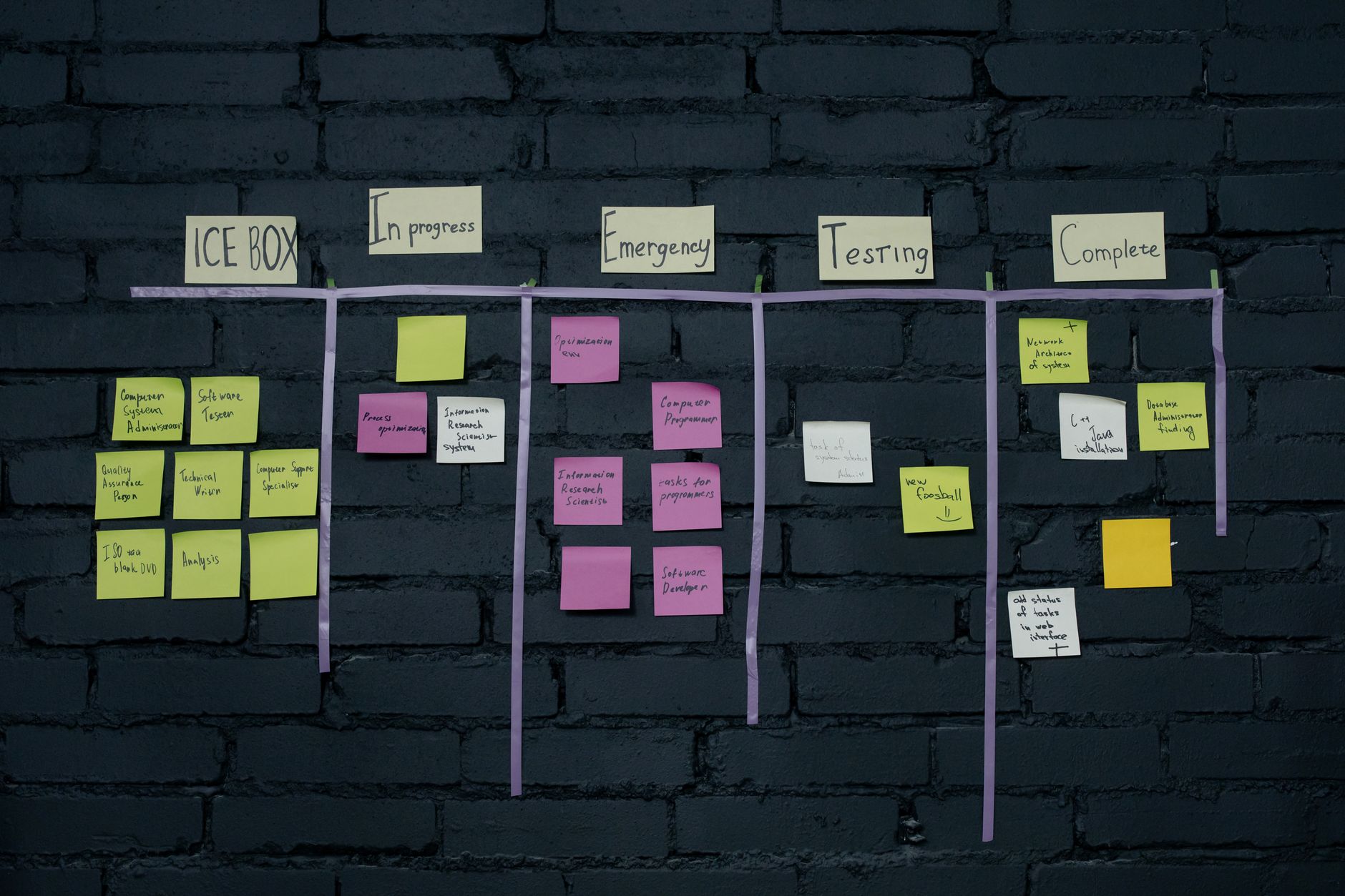
AI Delegation Matrix for Small Business
An AI delegation matrix helps small businesses decide which tasks an AI agent should do alone, which tasks need human approval, and which tasks should stay human-owned. The fastest productivity gains usually come from repeatable, low-risk work with clear inputs: reporting, inbox triage, CRM cleanup, invoice checks, inventory exceptions, and research briefs.
The mistake is delegating by excitement instead of evidence. If a task feels annoying, that does not automatically mean an agent should own it. A good AI delegation matrix scores the task by repeatability, judgment, risk, data access, and measurable return. That turns “let’s automate busy work” into an operating decision a small team can actually trust.
Why SMBs Need an AI Delegation Matrix Before Adding More Agents
Small businesses are adopting agents because they promise leverage: the same team can monitor more data, respond faster, and spend less time copying information between tools. But the work that wastes the most time is not always the work that should be automated first. A customer refund, payroll change, or inventory override may be repetitive, but it also carries financial or customer risk.
That is why delegation has to come before automation. Over the last two weeks, this blog’s Search Console data shows early but consistent agent-interest signals: the query “auto research” produced 20 impressions at an average position of 77.1, while the Auto Research page generated 55 impressions at an average position of 56. Those are not click-driving positions yet, but they show the market is still learning the vocabulary of agentic work. SMBs need practical decision tools, not just more tool lists.
The matrix below is designed for that moment. It helps you inventory work, rank the best first workflows, and set approval rules before agents touch money, customers, inventory, or public channels. After the matrix identifies the best candidate, use a staged AI agent implementation roadmap to pilot the workflow over 30-60-90 days before scaling autonomy.
The Five Scores in a Practical AI Delegation Matrix
Score each recurring task from 1 to 5 across five categories. A score of 5 means the task is highly suitable for agent delegation. A score of 1 means it should probably stay human-owned, at least for now.
1. Repeatability
Repeatability measures how often the work follows the same pattern. A weekly KPI summary, daily order exception scan, or monthly invoice aging report usually scores high. A one-off negotiation with a strategic partner scores low because context changes every time.
2. Judgment load
Judgment load measures how much subjective decision-making the task requires. Low-judgment work has clear rules: classify tickets, summarize yesterday’s orders, flag products with negative inventory, or draft a follow-up from a meeting transcript. High-judgment work involves tradeoffs, tone, pricing, legal exposure, or relationship management.
3. Risk of a bad action
Risk is the most important score. If the worst likely mistake is a messy draft, the task is a good candidate. If the worst likely mistake is a public post, angry customer, incorrect refund, deleted product, or financial loss, the agent should not act without approval.
4. Data readiness
Agents work best when the right data is connected, current, and structured. A support triage agent needs ticket history, customer records, and policy documents. A reporting agent needs clean analytics and revenue sources. If the information is scattered across private spreadsheets, old Slack threads, and people’s memory, fix the data path before delegating.
5. Measurable ROI
A task should have a visible outcome: minutes saved, faster response time, fewer missed follow-ups, fewer stockouts, lower rework, or better completion rate. If nobody can tell whether the agent helped, the workflow is not ready for serious delegation.
AI Delegation Matrix Template for Small Businesses
Use this AI delegation matrix template in a spreadsheet. Add one row for each recurring workflow your team performs weekly.
| Task | Repeatability | Low judgment | Low risk | Data ready | ROI visible | Total | Delegation level |
|---|---|---|---|---|---|---|---|
| Daily sales and inventory summary | 5 | 5 | 5 | 4 | 4 | 23 | Agent can run autonomously |
| Support ticket categorization | 5 | 4 | 4 | 4 | 4 | 21 | Agent drafts or routes |
| Invoice follow-up email draft | 4 | 3 | 3 | 4 | 5 | 19 | Human approval required |
| Refund approval | 4 | 2 | 1 | 4 | 4 | 15 | Agent researches; human decides |
| Pricing change for a product line | 2 | 1 | 1 | 3 | 3 | 10 | Keep human-owned |
As a rule of thumb, tasks scoring 21–25 can often be delegated with logging. Tasks scoring 16–20 should be draft-only or approval-gated. Tasks scoring 11–15 are research-only. Anything under 11 should stay with a person until the process is clearer.
The Four Delegation Levels for AI Agents
The matrix should not produce a simple yes or no. Most SMB workflows sit somewhere between “let the agent do it” and “never automate this.” Use four delegation levels.
Level 1: Agent observes and reports
The safest starting point is read-only monitoring. The agent checks data, summarizes what changed, and flags anomalies. It does not update records, message customers, or publish anything. This is the right first step for teams still building confidence with AI agent readiness.
Level 2: Agent drafts; human sends
At this level, the agent prepares the work but a person approves the final action. Examples include invoice reminder drafts, customer reply drafts, campaign summaries, and vendor follow-ups. Draft-only delegation is useful when tone, accuracy, or relationship context matters.
Level 3: Agent acts inside guardrails
The agent can take action if the request falls inside explicit limits. For example, it can tag a support ticket, update a CRM field, create a task, or post a private internal summary. For more complex workflows, pair this level with human-in-the-loop AI agent rules so risky actions still pause.
Level 4: Agent owns the workflow loop
The agent monitors, decides, acts, logs the result, and reports exceptions. Use this only after the workflow has clean data, low downside, clear success metrics, and an audit trail. A daily KPI report or internal inventory exception digest may reach this level. Refunds, legal responses, public announcements, and pricing decisions usually should not.
How to Build Your First AI Delegation Matrix in 45 Minutes
Do not start by asking, “What AI tool should we buy?” Start by auditing the work week. The best first agent is usually hiding in a repeated task people already complain about.
Step 1: List recurring tasks, not job titles
Write down 20 tasks your team repeats weekly. Use verbs: “summarize sales,” “route tickets,” “check overdue invoices,” “compare inventory,” “draft meeting notes,” “update CRM fields.” Agents need workflow boundaries, not department names.
Step 2: Score each task honestly
Give each task a 1–5 score across repeatability, judgment, risk, data readiness, and ROI. If the team disagrees, use the lower score. Disagreement usually means the process is not documented enough yet.
Step 3: Pick one 21+ task and one 16–20 task
Your 21+ task becomes the first autonomous or semi-autonomous workflow. Your 16–20 task becomes an approval-gated pilot. This gives you two learning loops: one for safe time savings and one for controlled delegation of more sensitive work.
Step 4: Turn the winning task into an SOP
For the chosen workflow, document the trigger, required inputs, allowed actions, approval rules, failure path, and output format. The AI agent SOP template is the natural next step after the matrix because it turns a good candidate into a repeatable operating procedure.
Step 5: Measure the first 30 days
Track time saved, cycle time, completion rate, rework, and escalations. If the agent saves two hours but creates three hours of review work, the workflow is not working. Use a simple AI agent ROI scorecard before expanding the agent’s permissions.
Examples of Good and Bad First Tasks for AI Delegation
A good first task is frequent, structured, and reversible. A bad first task is rare, ambiguous, emotional, public, or financially sensitive. The difference matters more than the tool.
Good first tasks include daily KPI summaries, weekly SEO performance recaps, support ticket categorization, CRM duplicate detection, inventory exception alerts, invoice aging summaries, and research briefs. These tasks have clear input data and obvious outputs. They also create value even when the agent only drafts or flags.
Weak first tasks include customer refund decisions, layoffs or HR decisions, legal responses, pricing strategy, product roadmap prioritization, and public crisis communication. Agents can help gather context for those decisions, but a human should own the judgment.
If you are starting from a broad backlog, use the workflow examples in AI agents for busy work to find practical candidates, then use the AI delegation matrix here to rank them.
Where Approval Gates Belong
Approval gates should not be treated as a lack of trust. They are how small teams get productivity without losing control. Put approval before actions that affect money, customers, inventory, permissions, or public reputation.
For example, an agent can identify overdue invoices and draft reminder emails automatically. But the first 30 days of sends should require approval. After the workflow proves accurate, you might allow automatic sends for invoices under a certain amount and still require approval for strategic accounts.
The same logic applies to inventory. An agent can flag likely stockouts, reconcile marketplace counts, or prepare a purchase order draft. It should not change availability, reorder expensive stock, or override marketplace rules unless the business has explicit thresholds and a reliable AI agent audit trail.
Common Mistakes When Delegating Work to AI Agents
The first mistake is automating a broken process. If humans cannot explain the steps, the agent will not magically infer the business rule. Document the workflow before handing it off.
The second mistake is giving agents write access too early. Read access creates insight. Write access creates consequences. Start with summaries and drafts, then expand only after the agent has proven accuracy over repeated runs.
The third mistake is measuring activity instead of outcomes. “The agent ran 40 times” is not a business result. “The agent saved six hours, reduced missed follow-ups by 30%, and escalated three high-risk cases” is a business result.
The fourth mistake is delegating work without a named owner. Every agentic workflow still needs a human accountable for the process, the data, and the exception rules.
Frequently Asked Questions
What is an AI delegation matrix?
An AI delegation matrix is a scoring tool that helps teams decide which tasks to hand to AI agents. It ranks work by repeatability, judgment, risk, data readiness, and measurable ROI.
Which tasks should small businesses delegate to AI agents first?
Start with repeatable, low-risk tasks that use clean data and produce obvious outputs. Daily reports, ticket triage, CRM cleanup, invoice summaries, and inventory exception alerts are usually stronger first candidates than refunds, pricing, or public communication.
When should an AI agent need human approval?
An AI agent should need approval before actions that affect money, customers, inventory, permissions, or public reputation. Drafting and summarizing can often be autonomous; sending, deleting, refunding, publishing, or changing records usually needs stricter rules.
How do you measure whether AI delegation is working?
Measure time saved, cycle time, completion rate, rework, escalations, and business impact. If the agent creates more review work than it removes, narrow the workflow or reduce the delegation level.
Is AI delegation different from automation?
Yes. Traditional automation follows fixed rules. AI delegation gives an agent a goal, context, tools, and boundaries so it can handle variable steps. The more judgment and risk involved, the more approval and logging you need.
Can small businesses use AI agents without technical staff?
Yes, but they should start with simple workflows and clear approval gates. The hard part is usually not technical setup; it is choosing the right task, cleaning up the input data, and defining what the agent is allowed to do.
Leave a Reply