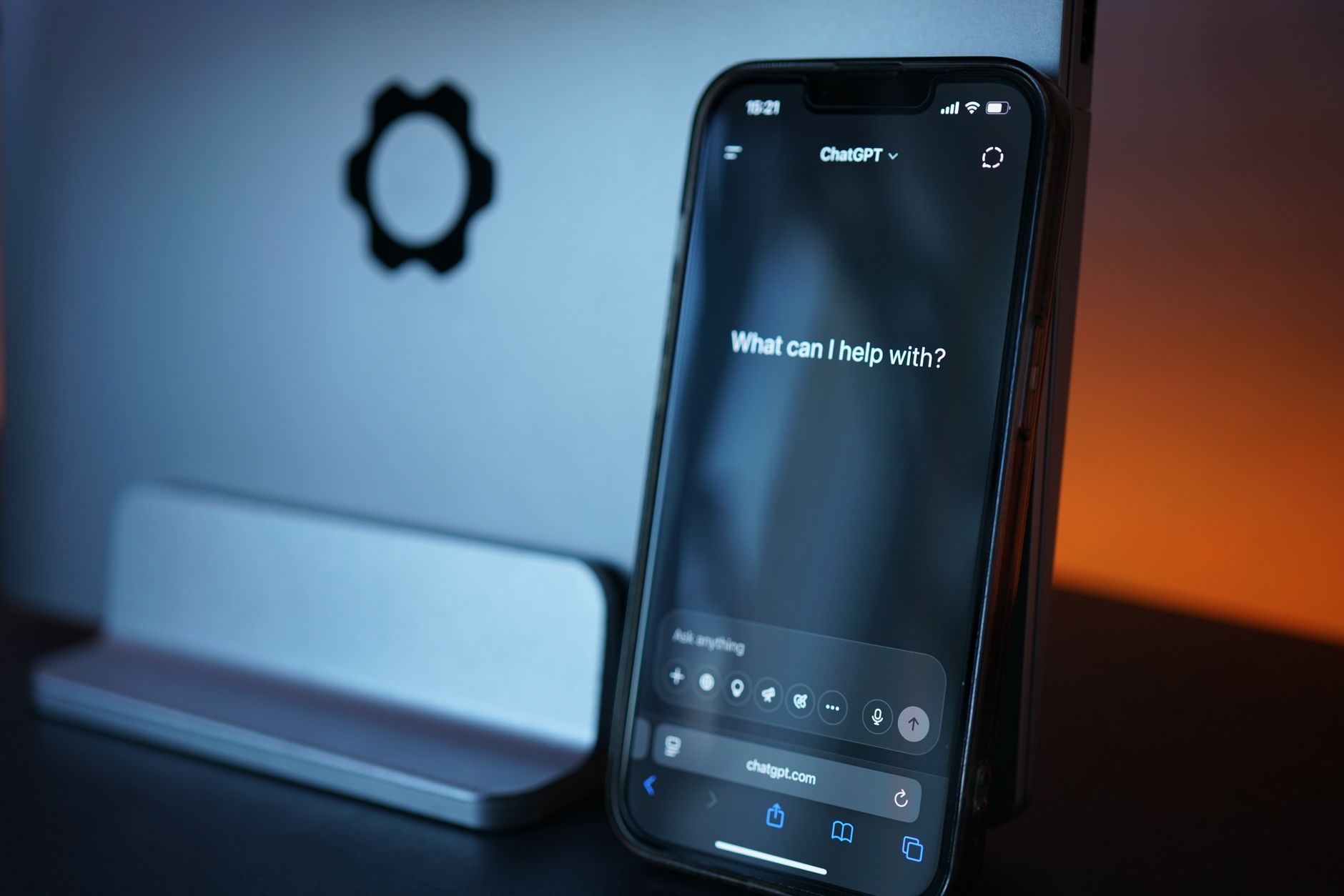
Answer engine optimization (AEO) is the practice of making your brand the answer that AI assistants and answer engines give — earning citations and recommendations in ChatGPT, Perplexity, Claude, Gemini, and Google’s AI Overviews, the way SEO earns rankings in classic search results. The searcher asks a question; the engine composes one answer from sources it trusts. AEO is the work of becoming one of those sources — and, for commercial queries, the brand the answer recommends.
This shift is not cosmetic. When an assistant answers directly, the click often never happens — and the brands inside the answer capture the demand while everyone else becomes invisible. This guide covers what AEO means, how answer engines choose their sources, the playbook for getting cited, how to measure it, and what the software that automates it costs.
Answer engine optimization in one sentence
AEO is making your content the source AI assistants cite and your brand the one they recommend — measured in citations and mentions, not blue-link rankings.
AEO meaning: the term, and its cousins
You’ll see three names for roughly the same discipline:
- AEO — answer engine optimization. The oldest and broadest term: optimize for engines that answer (AI assistants, AI Overviews, and answer boxes) rather than engines that list.
- GEO — generative engine optimization. Academic coinage for the same idea, emphasizing that the answers are generated by LLMs.
- AIO / LLM SEO / AI visibility. Marketing-tool labels for the same work.
The vocabulary hasn’t settled; the practice has. Whatever the label, the job is identical: be retrievable, be quotable, be recommendable. We use AEO throughout.
Why AEO matters now: the zero-click reality
Classic search already answered many queries on the results page; AI answers finish the job. A growing share of searches ends with no click at all — the assistant synthesizes an answer, cites two or three sources, and the searcher moves on. Traffic graphs across industries show the squeeze, and it’s structural, not cyclical.
The endpoint of the shift is agentic commerce — assistants not just answering but buying — which makes the citation layer the top of a transactional funnel, not a branding exercise.
The strategic consequence: impressions are decoupling from visits. Your content can inform the answer (and sell your brand) without earning a session your analytics will ever see. That changes what “winning” looks like — from ranking #1 and harvesting clicks, to being the source inside the answer. We unpack the data and what it means for content strategy in the zero-click search reality.
How answer engines actually pick their sources
Every major assistant works some variant of the same pipeline, and each stage is an optimization surface:
- Query fan-out. The engine expands your question into several sub-queries (you can sometimes see these as odd, verbose strings in Search Console) and retrieves candidate pages for each.
- Retrieval. Candidates come from a search index. If you’re not crawlable and indexed, nothing downstream can save you — AEO inherits SEO’s technical foundation.
- Extraction. The model reads the candidates and pulls the passages that answer the question. Clear, self-contained, answer-first passages get pulled; meandering prose gets skipped.
- Synthesis and citation. The answer is composed, and a handful of sources get cited or named. Consistent entities (your brand means one thing everywhere), corroboration across independent sites, and structured data all raise the odds you’re one of them.
Two practical corollaries. First, AEO is per-engine: ChatGPT, Perplexity, Gemini, and AI Overviews retrieve differently and cite differently, so visibility in one says little about the others. Second, AEO is per-query: you’re not “visible in AI” in general — you’re cited for specific questions, and the question list is where all measurement starts.
AEO vs SEO: same foundation, different scoreboard
AEO doesn’t replace SEO — it sits on top of it. Crawlability, site quality, and authority still decide whether you’re retrievable; AEO decides whether you’re quoted. The scoreboards differ completely, though: SEO counts rankings and clicks, AEO counts citations and recommendations, and tactics that win one can be neutral or even counterproductive in the other. We’ve written a full comparison — where they overlap, where they diverge, and how to sequence the two — in AEO vs SEO: the actual difference.
The AEO playbook: how to get cited
The full step-by-step lives in how to get your brand cited by ChatGPT and Perplexity; the shape of it:
- Answer first, then elaborate. Open every page with a direct, complete, quotable answer to the question the page targets — a bolded definition an engine can lift verbatim. (You’re reading the technique right now.)
- One question per page. Fan-out retrieval matches sub-questions to pages; a page that answers one question cleanly beats a page that touches ten.
- Structured data. JSON-LD (Organization, Product, FAQ, Article) tells engines what your entities are instead of leaving it to inference.
- Be corroborated. Engines trust brands that exist beyond their own domain: reviews, comparisons, Reddit threads, directory listings. Third-party mentions are the AEO equivalent of backlinks.
- Stay fresh and consistent. Stale pages fall out of answers; inconsistent naming splits your entity. Same brand name, same claims, everywhere.
None of this is exotic — it’s disciplined content work aimed at a new reader: a model deciding what to quote.
Should you let AI crawlers in? (The GPTBot question)
AEO has a gate before the playbook: crawler access. In 2023–24 many sites blocked GPTBot, PerplexityBot, ClaudeBot, and Google-Extended in robots.txt — sometimes as policy, often as a default someone copied. Whatever the original reasoning, understand what the block does today: it removes you from the candidate set for engines that respect it, which is unilateral disarmament in every answer your buyers read. For a publisher whose content is the product, blocking can be a defensible licensing position. For a business whose content exists to sell something else — every store, every SaaS — being quoted is the point, and the block is pure cost. Check your robots.txt now; you may be running a policy nobody chose.
Common AEO mistakes (learn from other people’s audits)
- Optimizing without measuring. Publishing “AI-friendly” content with no query set and no tracking is cargo cult AEO. Measurement comes first; it tells you which fixes matter.
- Treating all engines as one. Winning Perplexity (retrieval-heavy) and winning ChatGPT (knowledge- and corroboration-heavy) are different projects. Per-engine data or you’re guessing.
- Chasing your own brand queries. You’ll usually win “what is [your brand]” without help. The contested ground is category and problem queries — spend the effort where the buyer hasn’t heard of you yet.
- One mega-page for everything. Fan-out retrieval matches sub-questions to pages. Ten focused pages beat one exhaustive one — this is why the pillar-and-cluster structure you’re inside right now exists.
- Set-and-forget. Citations decay: models update, competitors publish, indexes refresh. AEO is a cadence, not a project.
Measuring AEO: citations, not clicks
You cannot manage what you don’t measure, and analytics won’t show AI answers. AEO measurement means asking the engines your buyers’ questions and recording who appears: which assistants cite you, for which queries, in what position, ahead of which competitors — tracked over time, with alerts when a citation drops. What to track and how to build the query set is its own guide: AEO tracking: what to measure. The tool category that automates the scanning — and what separates real trackers from dashboards — is covered in LLM citation tracking.
Terminal-native? The entire loop — GSC pulls, citation scans, executed fixes — also runs as commands: AEO from the command line.
AEO software: what it is and how to choose
Doing all of the above manually — asking four assistants fifty questions weekly and logging the answers — is possible and instructive, and nobody sustains it. AEO software automates the scan-record-alert loop, and the market now spans five distinct tool types, from pure trackers to platforms that also execute the content fixes. The buyer’s guide, including the checklist of what any tool must measure, is here: AEO software: what it is, the 5 types, and how to choose. What the category costs — pricing models, real ranges, and the hidden costs — is here: how much does AEO software cost?
And when you want the full scaffolding — scheduled scans, alerts, and draft-first fixes as one gated system — that’s an AEO harness.
AEO for e-commerce: where it bites hardest
For stores, AEO is not abstract: “best [product] for [need]” queries are exactly what shoppers now ask assistants, and the answer names three brands — or names your competitors. E-commerce AEO adds store-specific work to the playbook: product schema that matches the live catalog, product pages that answer the comparison questions shoppers actually ask, and consistency between what your site claims and what reviews say.
It also closes a loop software can automate end to end: scan (ask the assistants your queries, record who’s cited), diagnose (find the gap — missing schema, thin page, unanswered question), fix (draft the content or JSON-LD change, publish after approval), verify (re-crawl to confirm the fix is live), repeat weekly. That loop is precisely what datavessel’s AEO scanning runs for stores — with results delivered to Slack, and fixes executed draft-first by agents rather than left as another report.
Platform-by-platform playbooks — including what agents can execute on each: AEO for WordPress, AEO for Shopware, and AEO for Shopify.
And because assistants recommend products, not stores, the per-product version of the playbook — buying queries, PDP fixes, a citation score per product — is its own guide: how to get your product recommended by ChatGPT.
Your first 30 days of AEO
A concrete starter plan, sized for one owner or marketer without new headcount:
Week 1 — Baseline. Write your query set (20–50 questions across category, problem, and comparison bands). Run every query through at least two assistants and log who’s cited and who’s recommended. Check robots.txt for AI-crawler blocks. You now know your citation share and your competitors’ — most brands discover a baseline near zero, which is motivation, not bad news.
Week 2 — Structural fixes. Add or repair JSON-LD on your money pages (Organization, Product, FAQ). Rewrite the opening paragraph of your five most important pages answer-first. These are the cheapest wins in the program.
Week 3 — Close one content gap. Pick the single most valuable query where a competitor is recommended and you’re absent. Build the page that deserves to win it: one question, direct answer, real depth, schema. One page done well teaches you more than five done thin.
Week 4 — Corroboration and cadence. Fix your worst third-party surface (unanswered reviews, a stale directory listing, an absent comparison post). Then set the tracking cadence — re-run the scan, diff against week 1, and decide whether the monthly manual loop is sustainable or software should carry it.
After 30 days you have a baseline, a rhythm, and at least one contested query moving. That’s a program, not a project.
Frequently asked questions
What does AEO stand for?
Answer engine optimization — optimizing to be cited and recommended by engines that answer questions (ChatGPT, Perplexity, Claude, Gemini, Google’s AI Overviews), rather than to rank in a list of links.
Is AEO replacing SEO?
No. SEO remains the foundation — retrieval still runs on search indexes. AEO is the added discipline of winning the synthesized answer. Stores that do only SEO stay findable but quotable-by-luck; stores that do both get found and recommended.
How long does AEO take to show results?
Faster than classic SEO in many cases: engines re-retrieve continuously, so a fixed page or new schema can enter answers within days to weeks. Competitive commercial queries move slower — corroboration takes time to build.
Can I do AEO without software?
Yes: pick 20–50 buyer questions, ask each major assistant monthly, log citations in a spreadsheet, and work the playbook above. Software earns its keep when you want weekly cadence, competitor tracking, alerts, and executed fixes.
Does AEO work for small brands, or only household names?
It skews toward the specific. Assistants answering “best ergonomic desk chair under $300 for tall people” happily cite a focused specialist over a giant with a vague page — the long tail is where small brands win citations they could never win as rankings.
What’s the single highest-leverage first step?
Run your 20 most valuable buyer queries through two assistants today and write down who gets recommended. An hour of work, and it converts AEO from an abstraction into a target list — the queries where competitors are being named to your buyers.
The bottom line
Search is becoming answers, and answers name names. AEO is the discipline of being the name: retrievable like good SEO, quotable by structure, corroborated beyond your own site, and measured by citations rather than clicks. Start with the query list, get the tracking in place, fix the gaps it exposes — and treat every page you publish as something written for two readers: the human who buys, and the model that recommends.
See how AI talks about your store — and get the gaps fixed, not just reported: datavessel AEO scanning →
Leave a Reply