
Category: Uncategorized
-
Google Search Console Alerts: What Matters + A Slack Alert Spec
Stop ignoring GSC emails. Learn which Search Console alerts matter, how to set thresholds for traffic drops, and a Slack-ready alert spec you can copy.
-
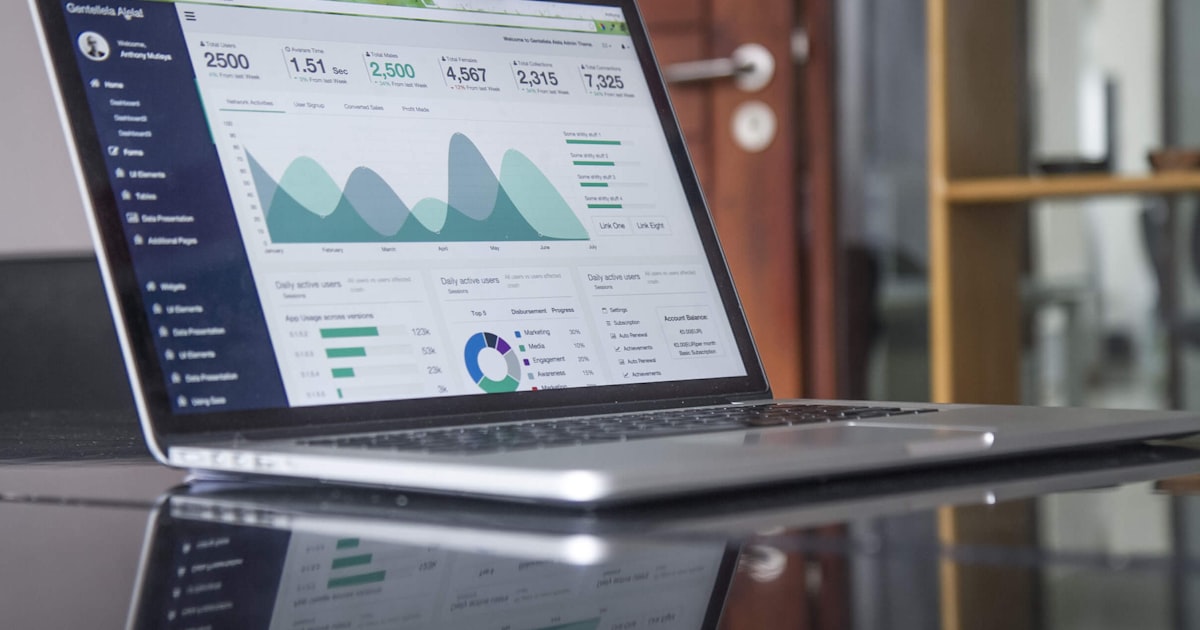
SEO Growth Autopilot: AI Agent That Writes Blog Posts While You Sleep
SEO Growth Autopilot is an AI agent that finds trending keywords, writes optimized blog posts, and learns from results. Like a junior SEO marketer who works 24/7.
-
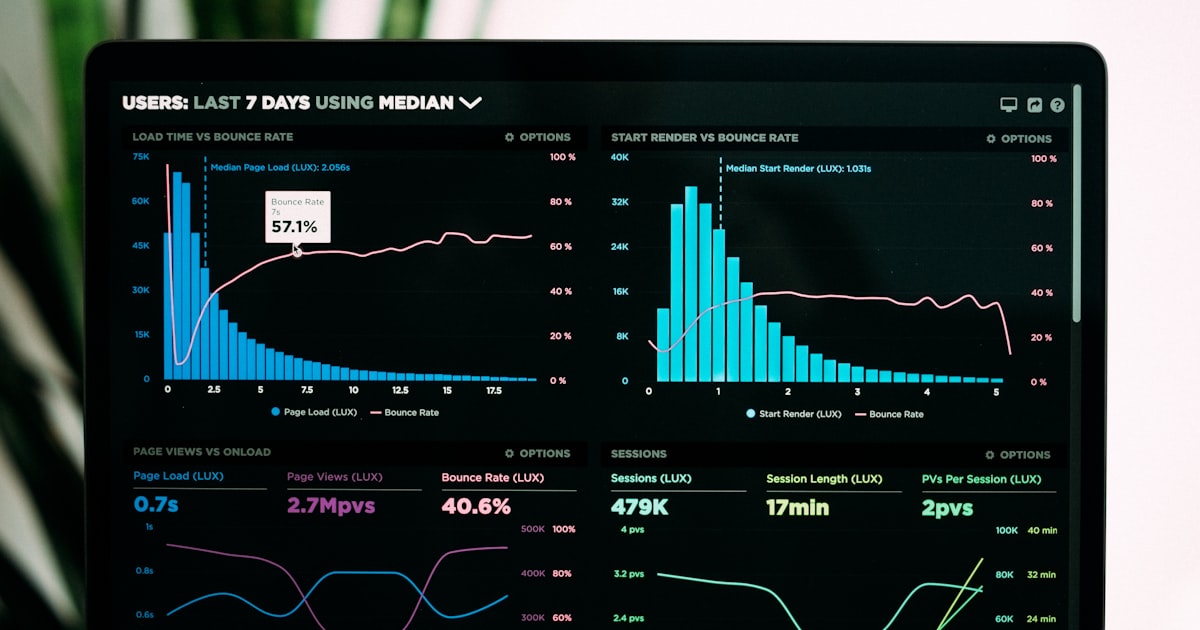
datavessel WordPress Integration: Connect Your Blog to AI
datavessel now connects to WordPress. Scan your blog content, detect duplicate topics, and power AI agents like SEO Growth Autopilot with your existing posts.
-
Secret Sales Shopify Integration: Setup + Tracking Guide
Secret Sales Shopify integration guide: setup checklist, SKU/inventory mapping, attribution, and monitoring to avoid overselling and prove channel ROI.
-

OpenClaw Ultron vs datavessel: Two Paths to AI Business Intelligence
OpenClaw Ultron vs datavessel compared. Calacanis built an all-knowing agent for operations. datavessel delivers instant analytics without the engineering overhead.
-
Karpathy’s Autoresearch: When AI Agents Do the Research
Andrej Karpathy’s autoresearch lets AI agents run ML experiments autonomously — 126 experiments overnight, measurable improvement, zero human intervention.
-
New Integration: HubSpot CRM
datavessel now connects to HubSpot CRM. Query contacts, deals, and pipeline health from Slack or the web chat. Two prebuilt agents included.
-
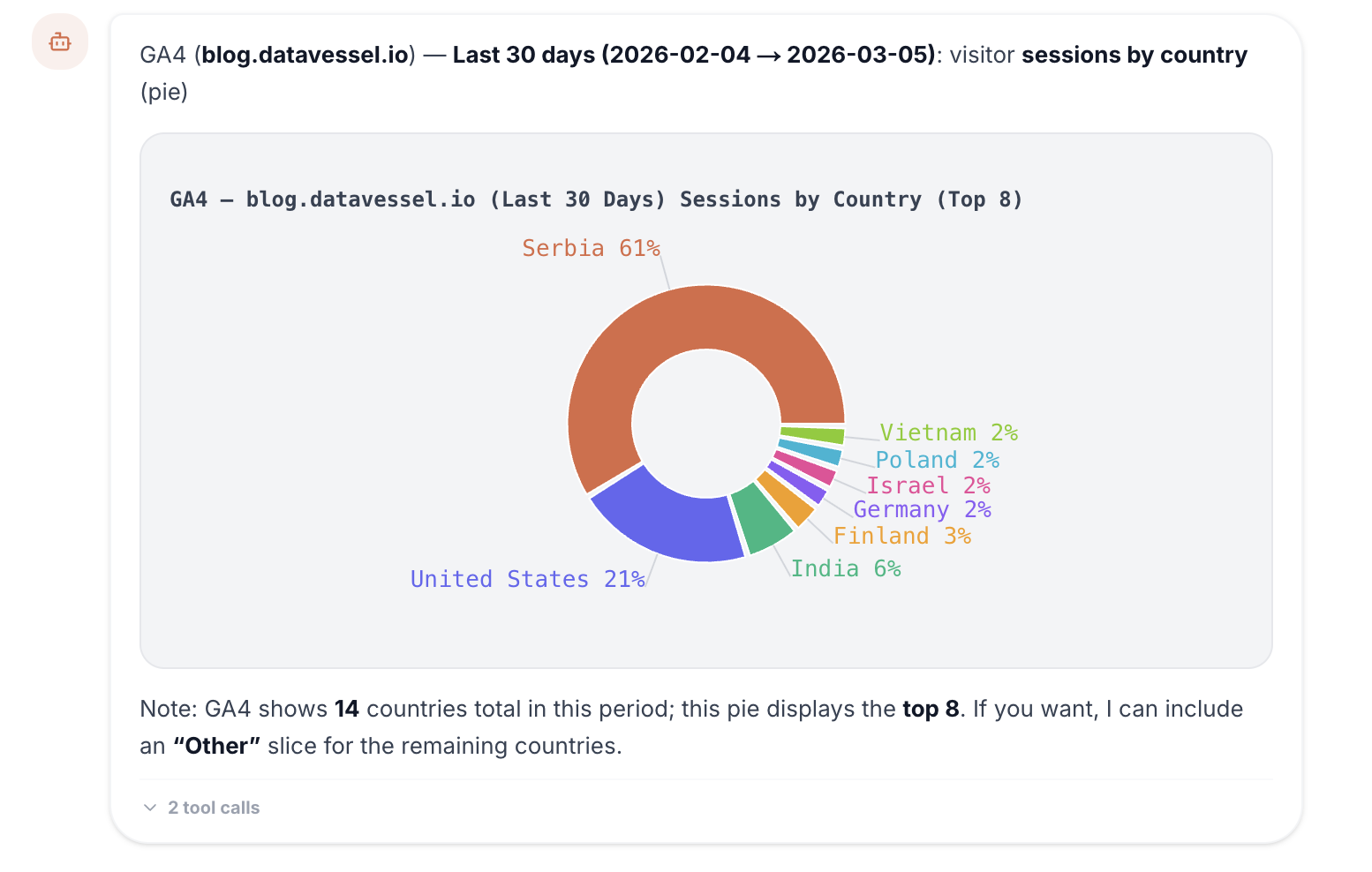
New: Inline Charts in Web Chat
The datavessel web chat now renders interactive charts inline. Ask about traffic trends and see a chart, not a table. Data exploration, visualized.
-
We Just 10x’d Your Daily Agent Runs
We increased daily agent run limits by 10x across Free, Starter, and Professional plans. More room to experiment before you upgrade.
-

datavessel vs Dust: Built for Different Teams
Dust is built for enterprise teams with compliance needs. datavessel is built for small teams who want analytics and ecommerce agents without per-seat pricing or setup complexity.
-
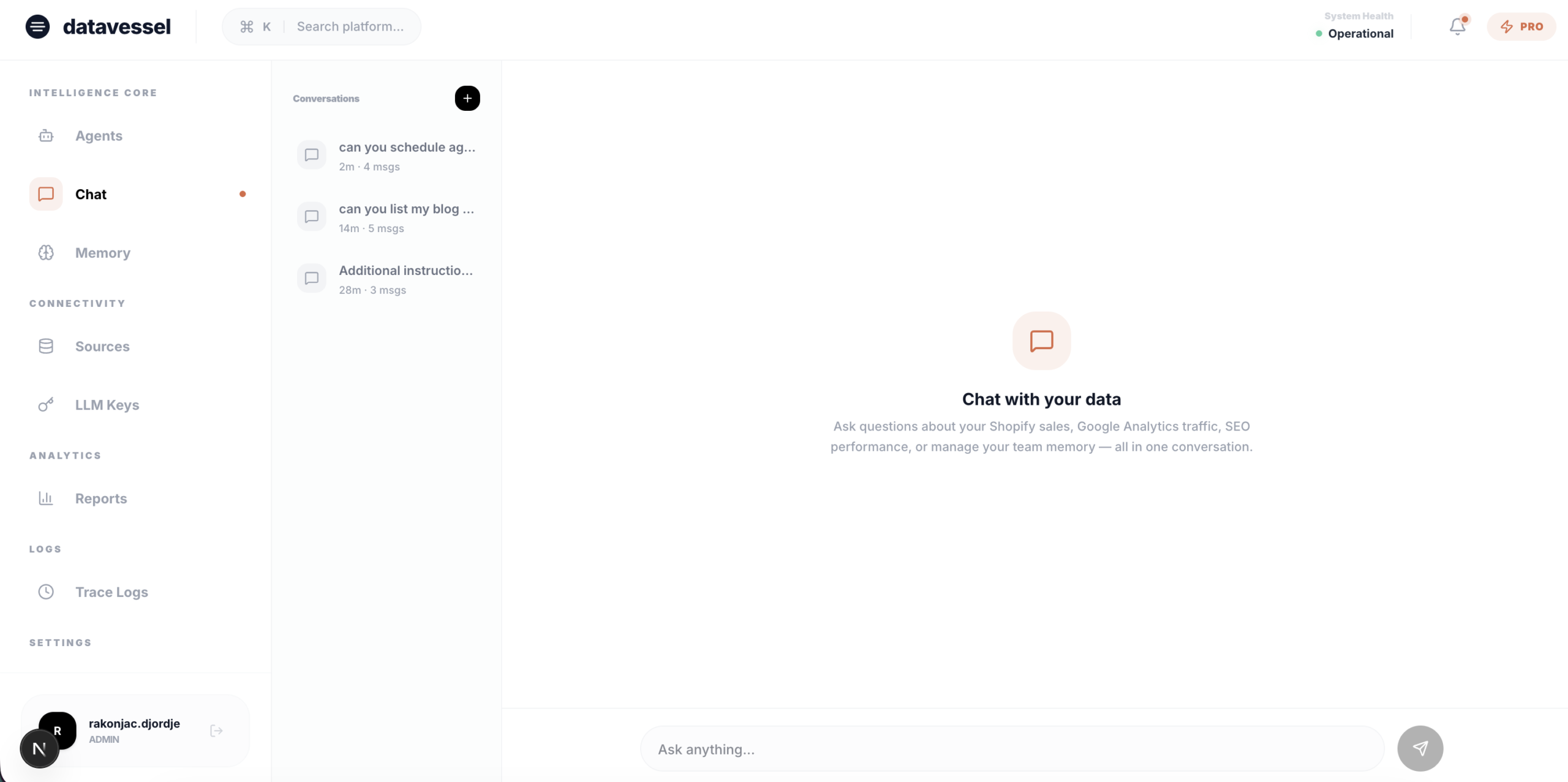
New Feature: Web Chat Interface
datavessel now has a chat interface built into the dashboard. Same AI agent, same tools, same capabilities as the Slack bot — but in your browser. No Slack required.
-
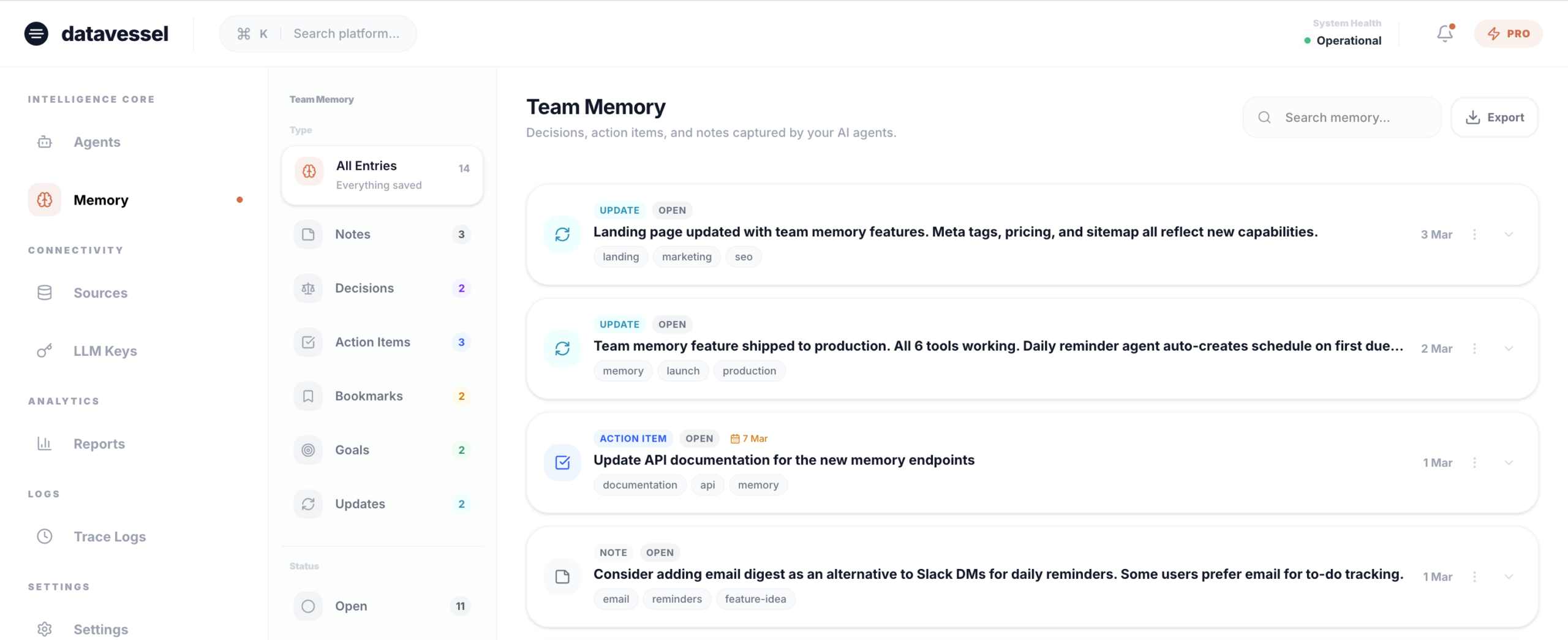
New: LLM / AI Team Memory Dashboard
The Team Memory Dashboard gives your team a visual, filterable view of every decision, action item, and bookmark your AI agent has saved from Slack.
-

New Feature: Team Memory
datavessel now remembers what your team decides, assigns, and bookmarks—right in Slack. Tell the bot something important. When you need it back, just ask.
-
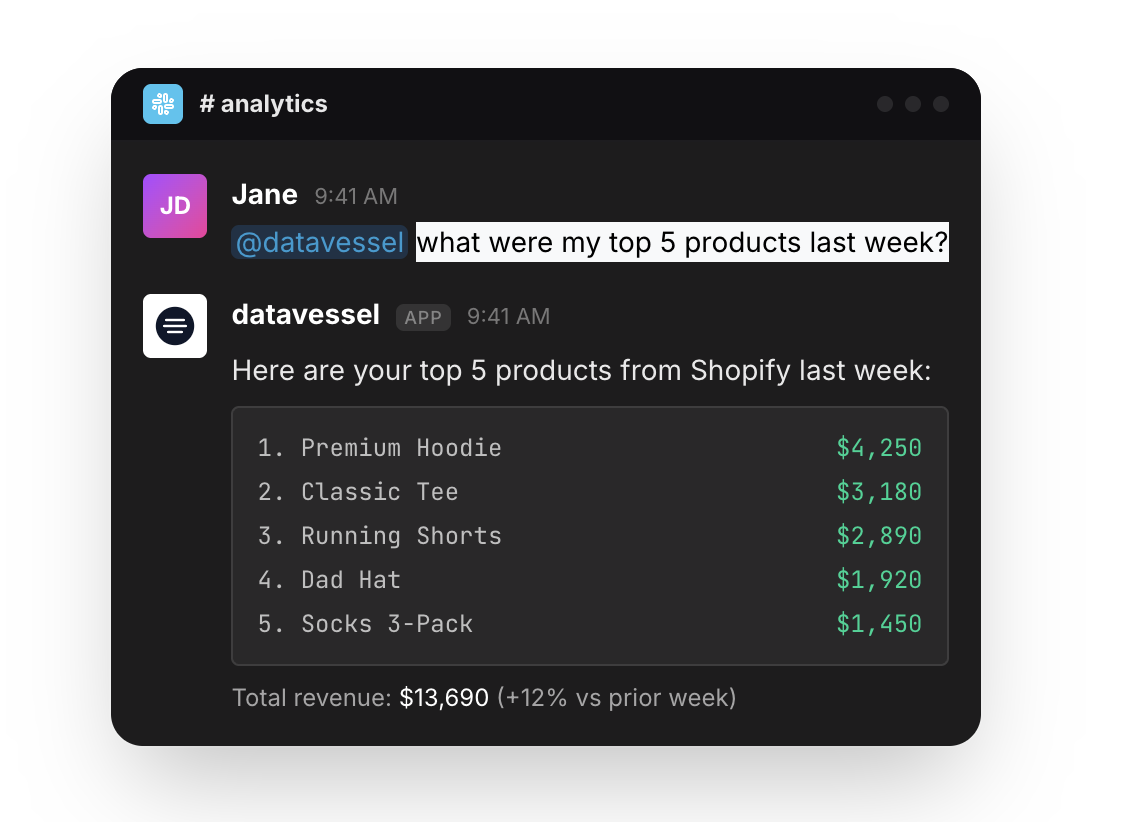
datavessel: Now Slack-Native
datavessel is now a Slack-native AI agent. Query your analytics, ecommerce, and SEO data with a simple @mention. No dashboards, no context switching. Just ask.
-
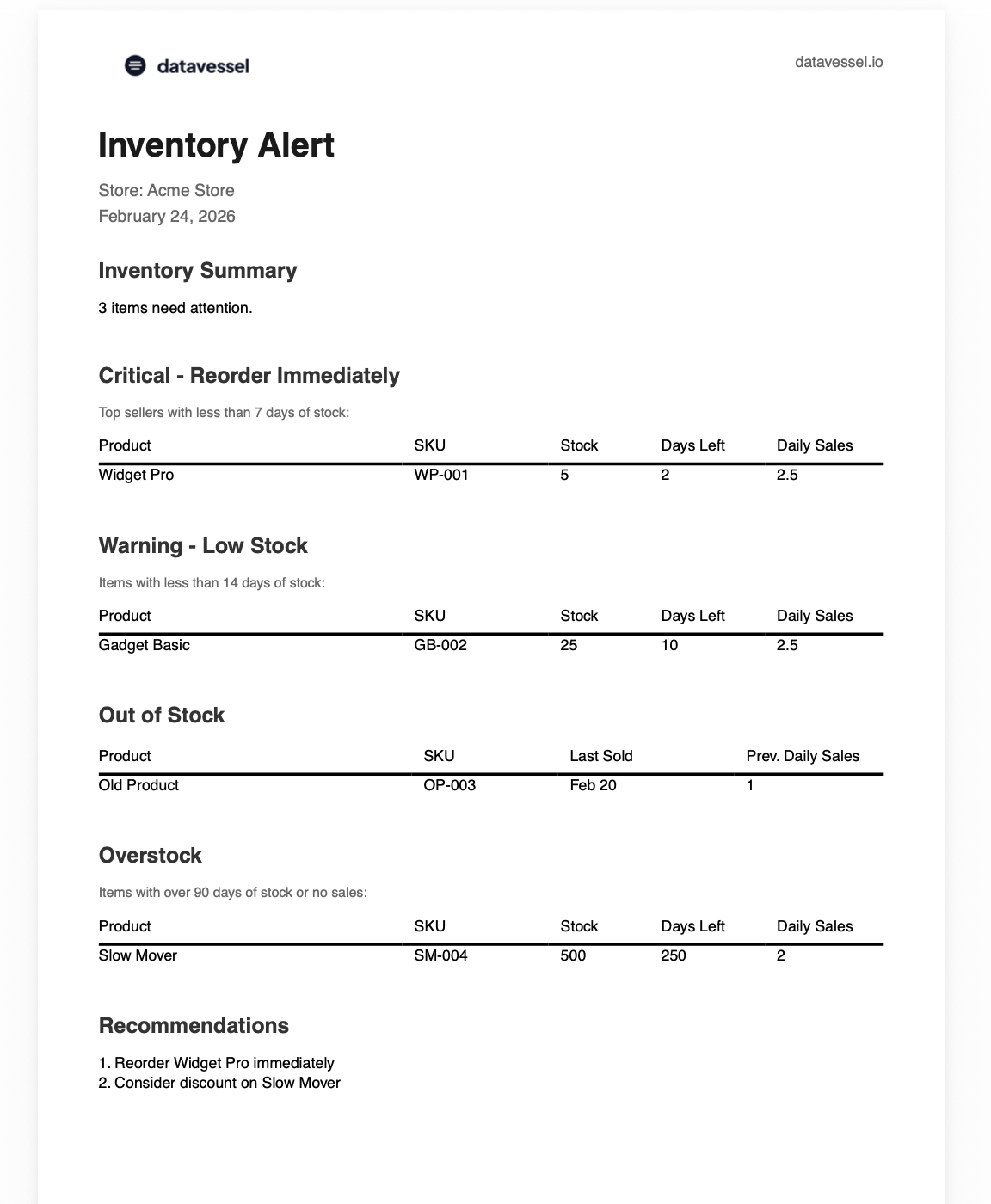
Platform Update: Better Report Generation
We rebuilt how agents generate PDF reports. Structured templates replace inline code, validation catches errors early, and every report now looks consistent.
-
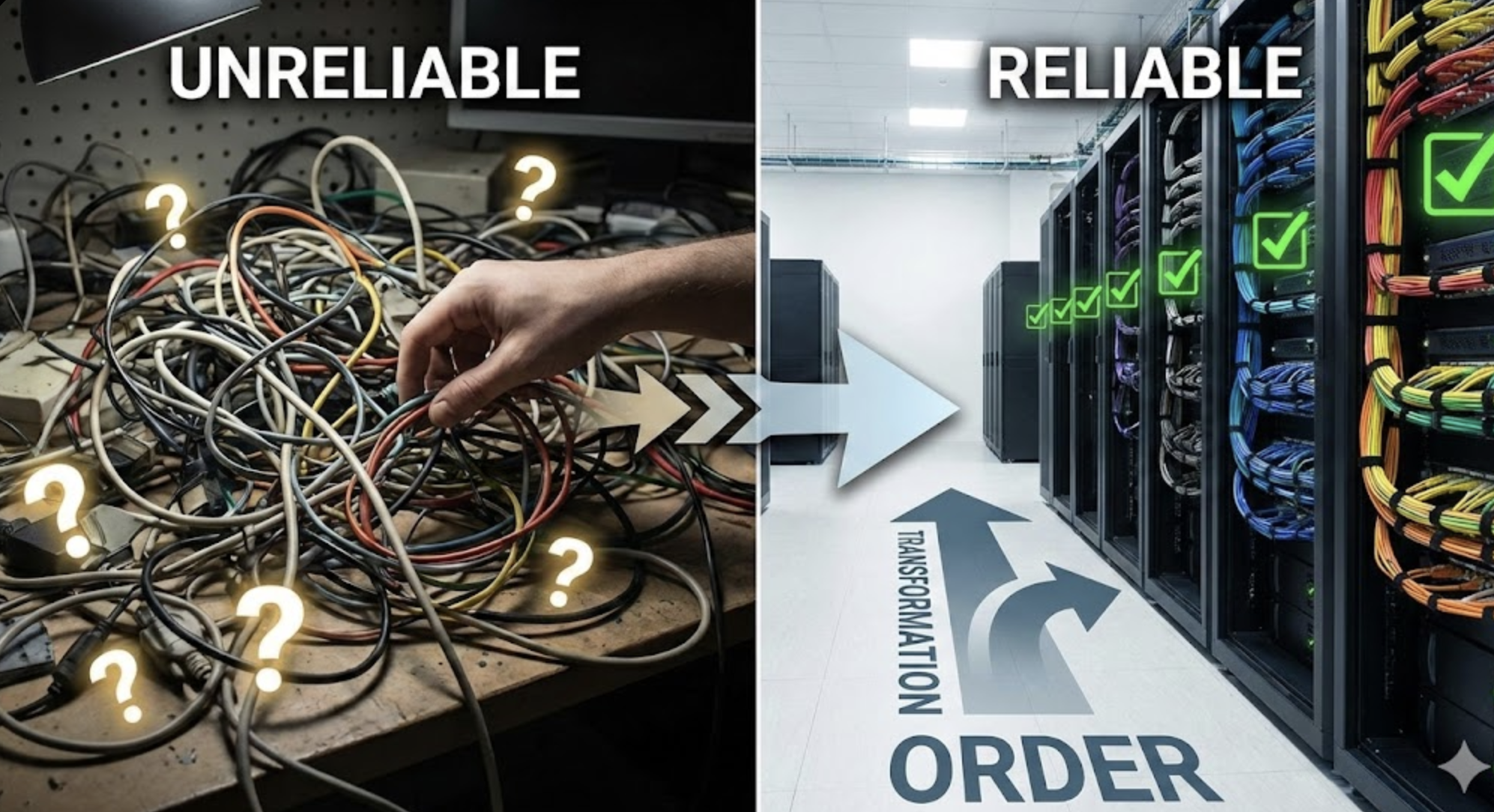
Platform Update: Making Agents More Reliable
We’ve paused shipping new features to focus on reliability. This week we fixed issues causing agent runs to fail unexpectedly. Stability comes first.
-
Information Gain SEO: Why Repeating Competitors Gets You Demoted
Information Gain measures how much new knowledge your page adds after a user has seen competitors. If your score is zero, you rank lower—regardless of backlinks.
-
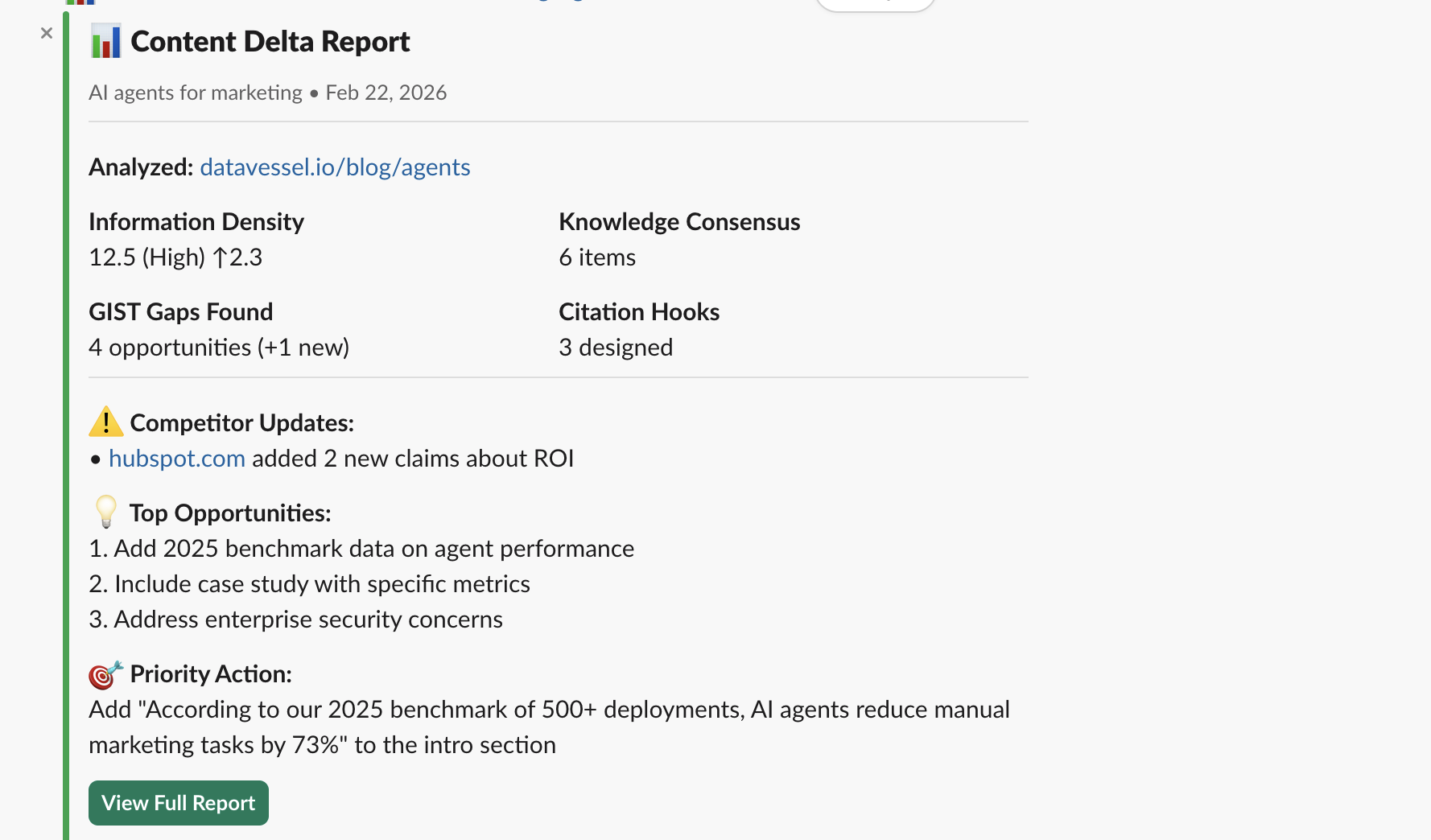
New Agent: Content Delta Monitor
The Content Delta Agent analyzes your content against competitors, calculates your Information Density score, and tells you exactly what to add to rank in both Google and AI answers.
-
How to Get Cited by ChatGPT: The Extraction Box Method
LLMs don’t read your whole page—they scan for high-density fact blocks. Learn the Extraction Box technique to increase your ChatGPT citation probability.
-
New Source: LinkedIn
datavessel now supports LinkedIn as a source. Build agents that create and publish posts on your behalf. For power users who know what they’re doing.
-
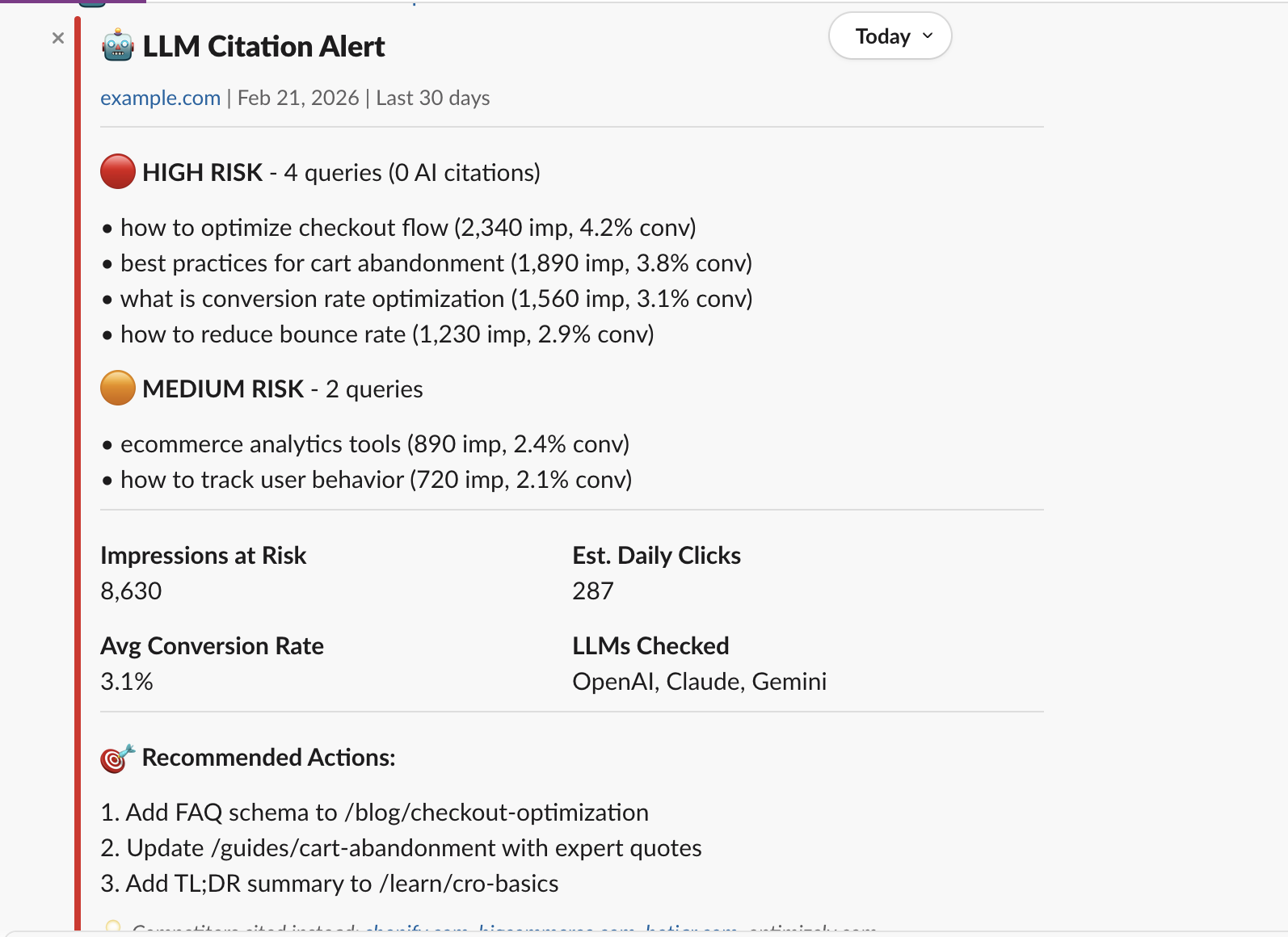
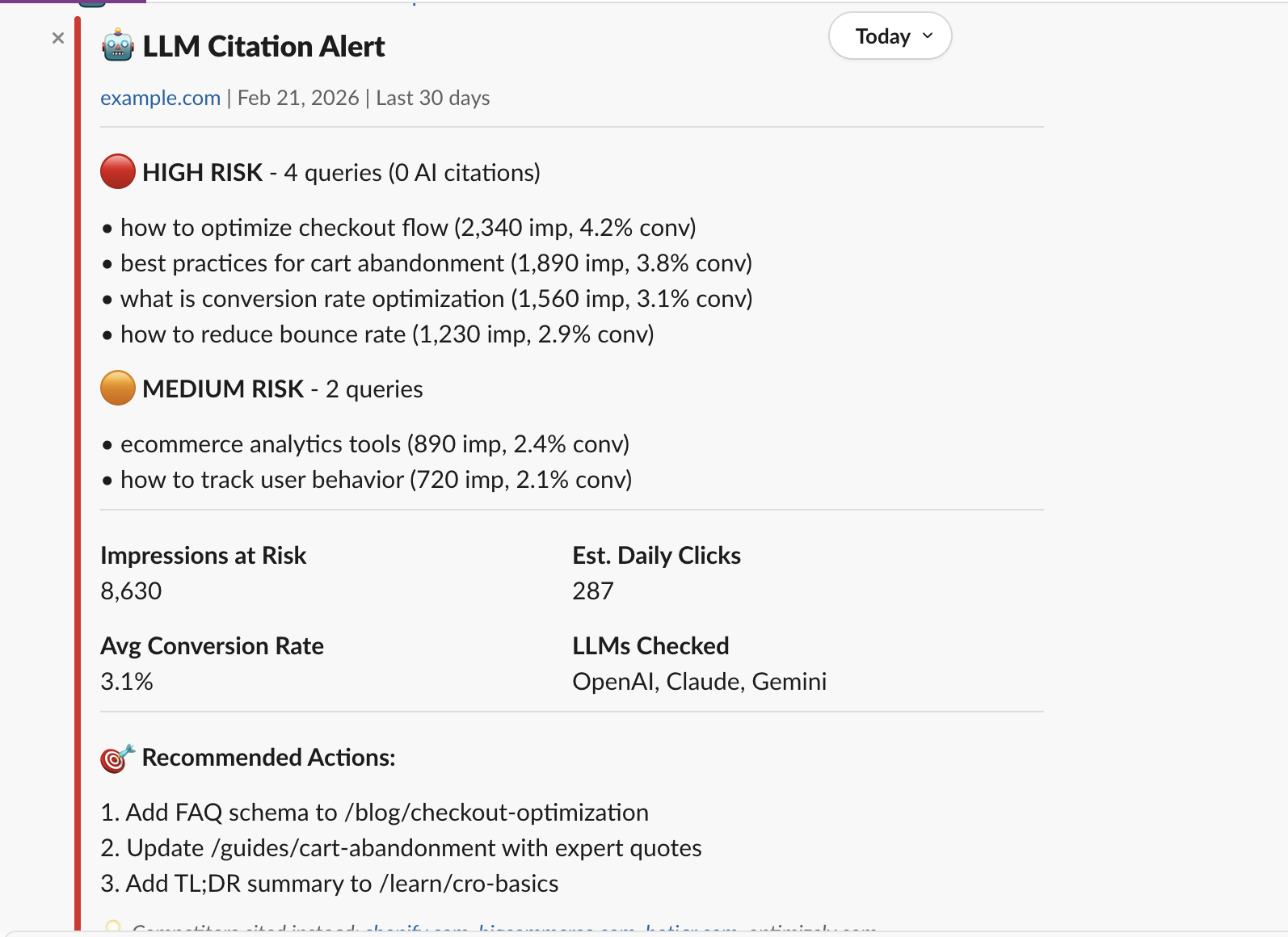
New Agent: LLM Citation Alerts
The LLM Citation Agent monitors queries where you rank well in Google but get zero AI citations. Find your AEO gaps and fix them before traffic shifts.
-
Stop Checking Dashboards. Start Acting on Alerts.
AI monitors your Shopify or WooCommerce store 24/7 and sends Slack alerts when revenue drops, conversions decline, or SEO traffic shifts. Now in beta.
-
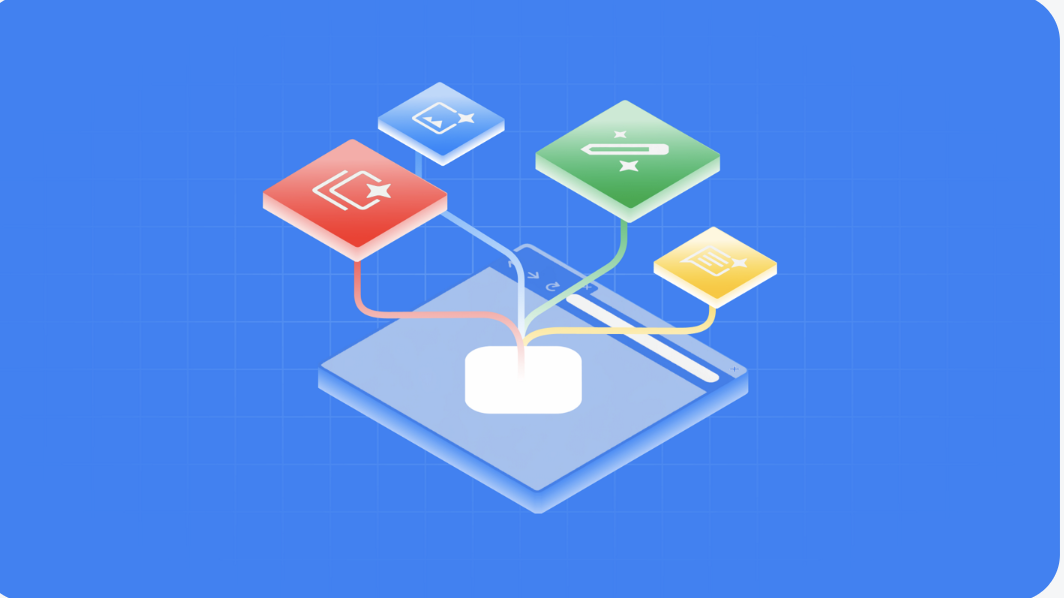
Chrome’s WebMCP Validates What We Knew: The Future Runs on MCP
Google Chrome’s new WebMCP standard for AI agents validates datavessel’s early investment in MCP protocol. Here’s why this matters for the agent ecosystem.
-

OpenClaw Founder Peter Steinberger Joins OpenAI
Peter Steinberger, creator of OpenClaw, joins OpenAI to lead next-gen AI agents. OpenClaw moves to a foundation and stays open source.
-
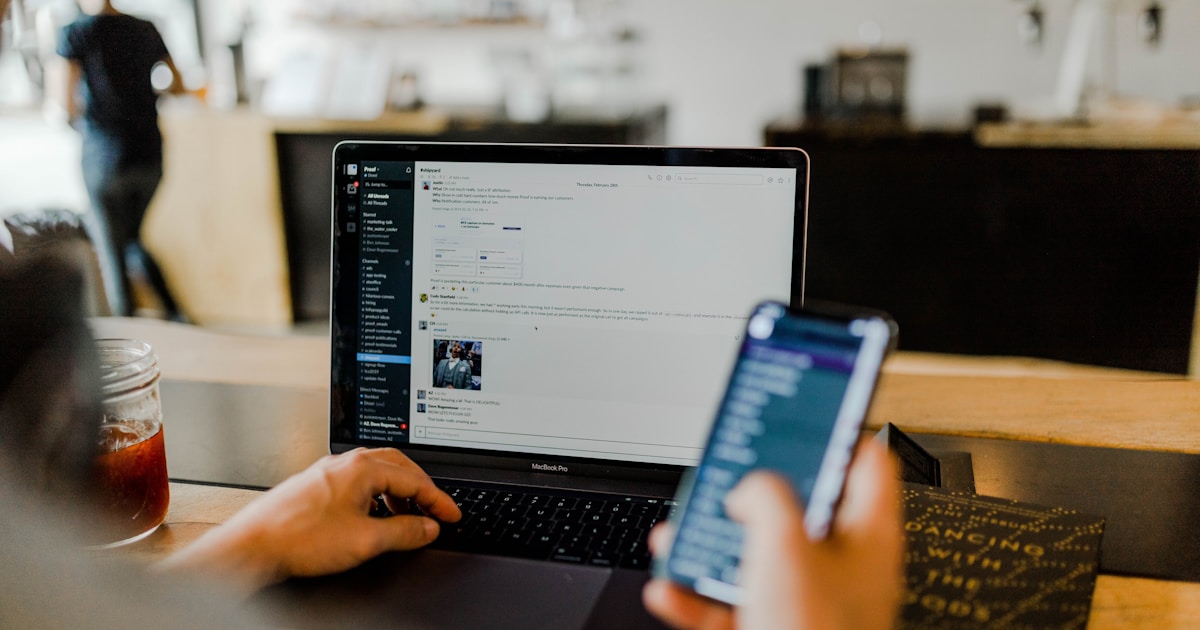
Slack Daily Summary Agent: Never Miss What Matters
The Slack Daily Summary agent reads all channels, extracts action items and decisions, and posts a summary to your team. Saves 30-60 minutes daily.
-

Set It and Forget It: Automate Your Data Intelligence with Scheduled Agents
DataVessel Pro now supports scheduled agents. Automate daily revenue reports, weekly analytics summaries, and monthly audits with timezone support.
-

Agent Platform Updates: Multi-Source Workflows and Smarter Agents
DataVessel agents now support multi-source workflows and auto-detection of tools. Run analytics and post results to Slack in a single agent.
-

Slack Integration: Connect Your Workspace to AI Agents
DataVessel now connects to Slack. Read channels, post messages, analyze conversations, and automate workspace communication with AI agents.
-
DataVessel: From MCP Server to Full AI Agent Platform
DataVessel evolves from MCP server to full AI agent platform. Automate analytics, SEO monitoring, and e-commerce insights with built-in and community agents.
-
GA Expert Analysis: Guided Prompts for Google Analytics
DataVessel adds four guided prompts for Google Analytics. Run traffic audits, acquisition analysis, content performance, and conversion funnels with one click.
-
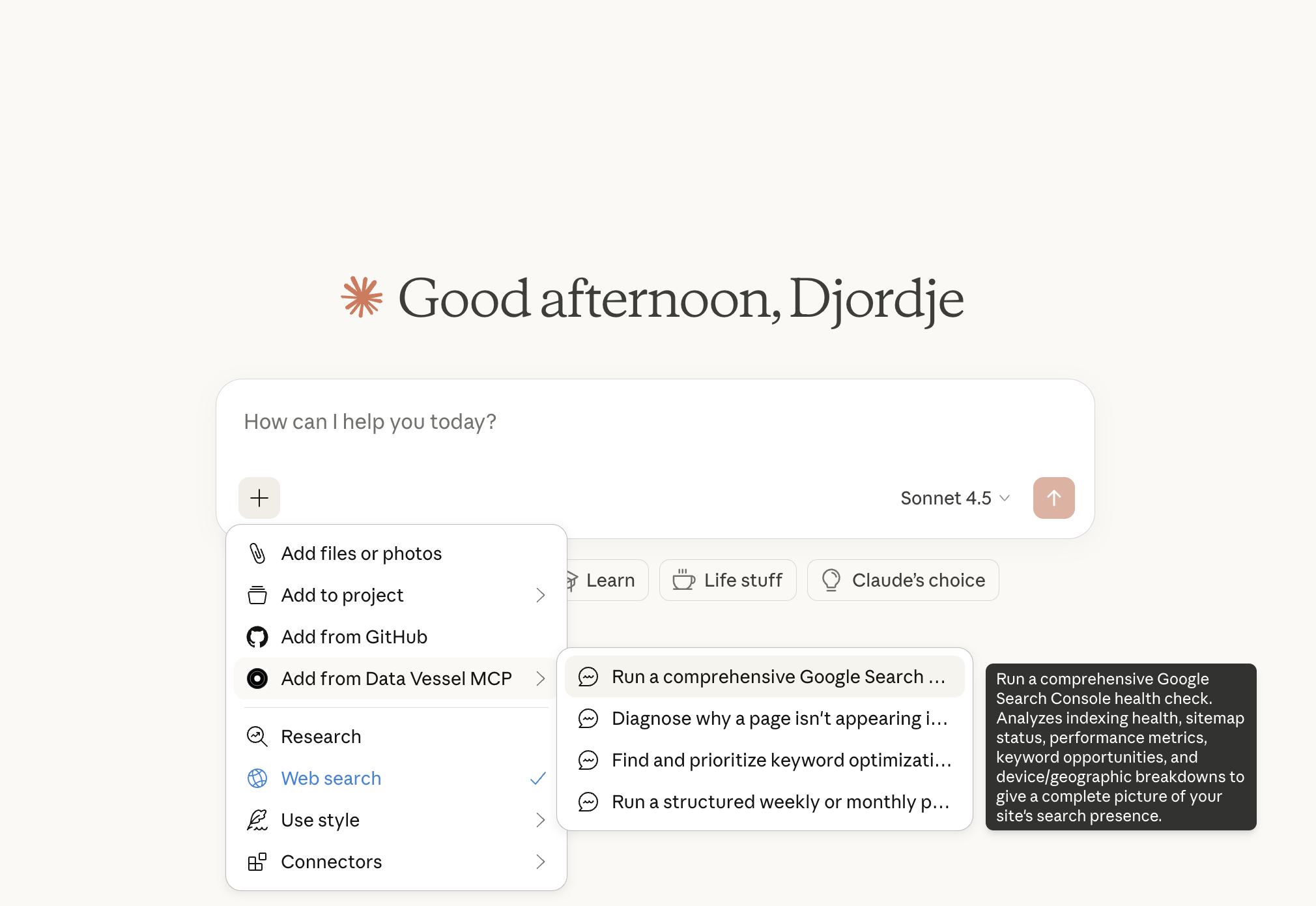
GSC Expert Analysis: One Click in Claude Desktop or Mobile
DataVessel’s GSC prompts bring expert-level SEO analysis to Claude Desktop and Mobile. Select a prompt, get comprehensive insights. No manual tool calls needed.
-
GSC Agentic Prompts: Guided SEO Workflows in DataVessel
DataVessel now offers agentic prompts for GSC. Run complete SEO audits, diagnose indexing issues, and find keyword opportunities with guided workflows.
-
New GSC Tools: URL Inspection & Sitemap Details
DataVessel adds URL inspection and sitemap analysis tools for Google Search Console. Check indexing status, diagnose crawl issues, and analyze sitemaps conversationally.
-

Universal Commerce Protocol: What Store Owners Must Know
The Universal Commerce Protocol lets AI agents buy from your store. Learn what UCP means for merchants, how to prepare, and why it matters for your business.
-
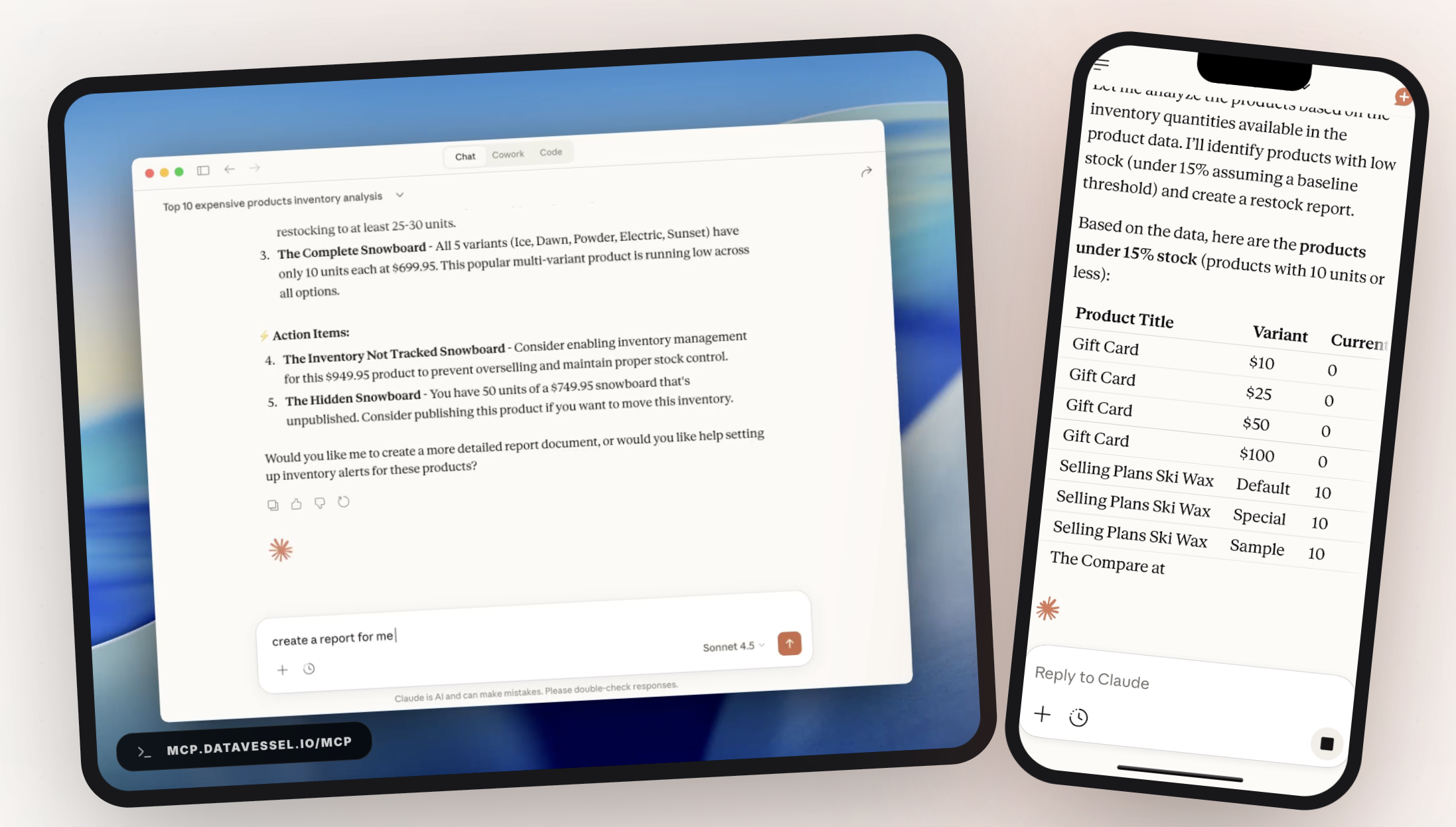
Early Access Promo: First 100 Users Get 3 Months Pro—Free
DataVessel early access promo is live. First 100 users get 3 months Pro free. Seats are being claimed—register now to secure yours.
-
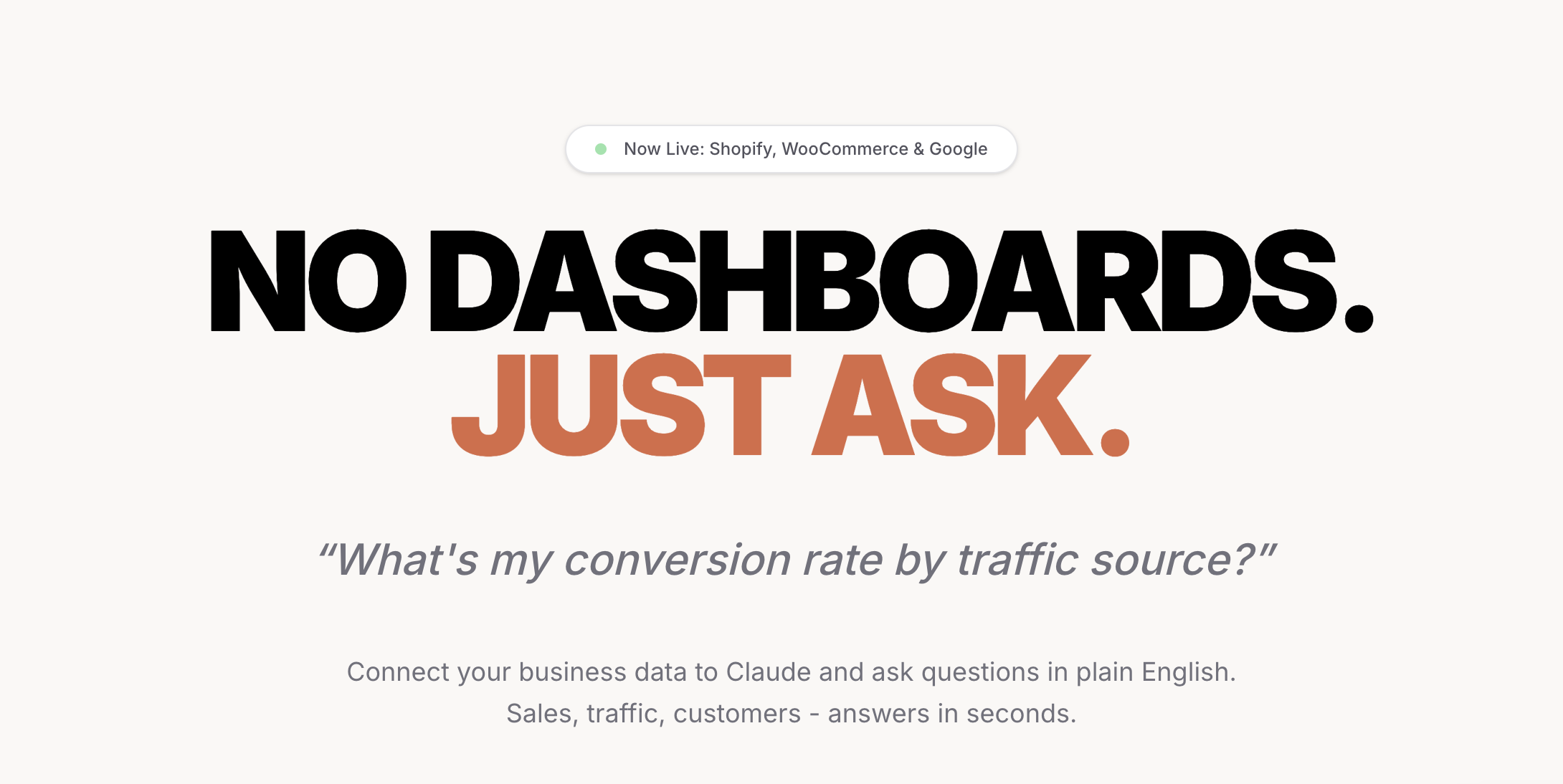
DataVessel MCP: From Generic Chatbot to Business Intelligence Partner
DataVessel MCP transforms Claude from a generic chatbot into an AI business analyst. Structured responses, historical context, and actionable insights—not data dumps.
-

The Future of E-commerce: Your Phone, AI, and Complete Freedom
The future of e-commerce means running your business from anywhere. AI handles data, you make decisions. No office required—just your phone and vision.
-
How to Connect Shopify to Claude and Query Your Store Data
Connect Shopify to Claude using DataVessel’s MCP integration. Ask questions about orders, products, and customers in plain English.
-
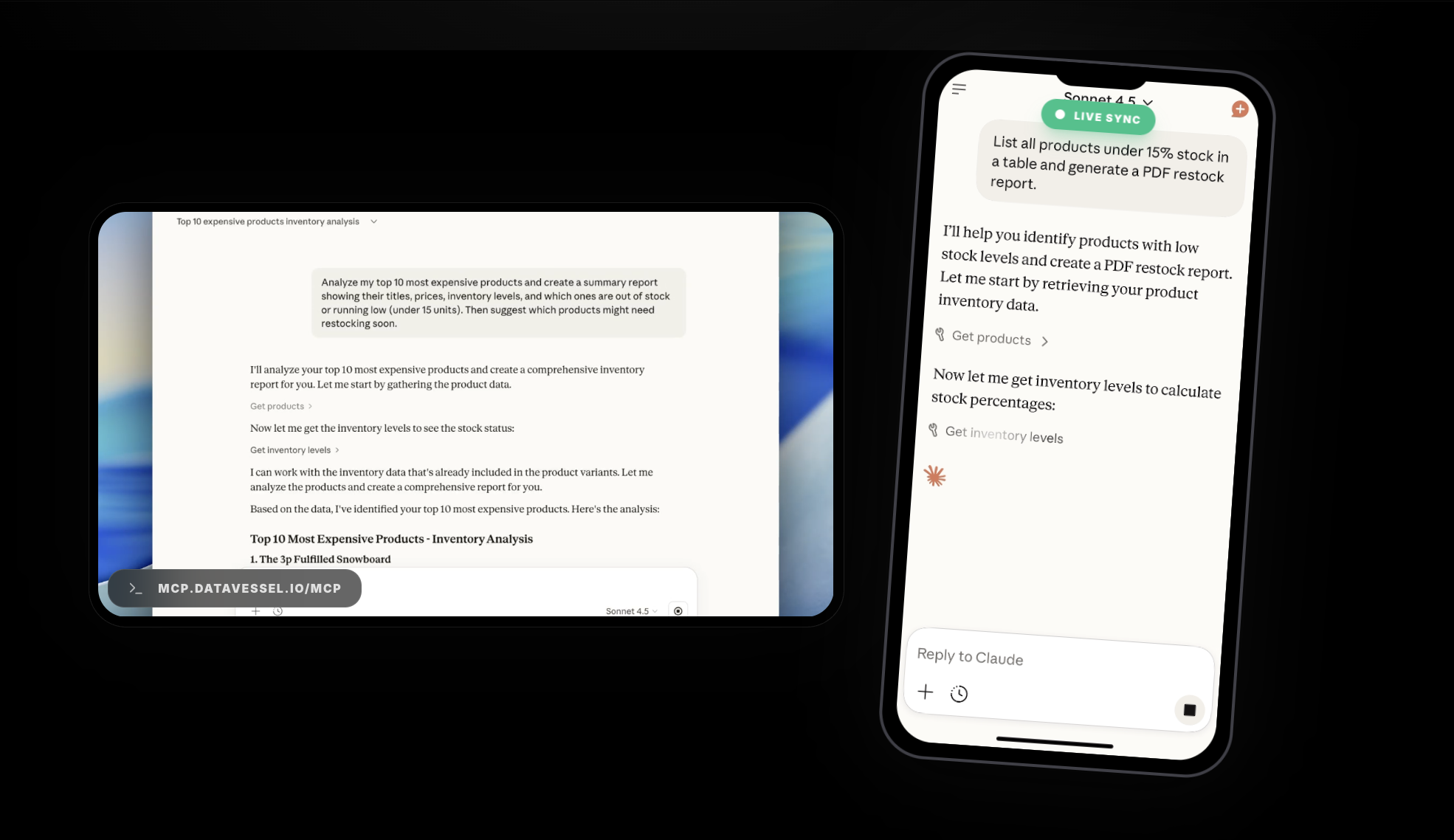
DataVessel Now Works on Mobile via Claude’s iOS and Android Apps
DataVessel mobile support is here. Query your Shopify, WooCommerce, and analytics data from Claude’s official iOS and Android apps.
-
Anthropic Uses Super Bowl to Mock OpenAI’s Ad-Supported ChatGPT
Anthropic’s Keep Thinking campaign debuts at Super Bowl 2026, mocking OpenAI’s ChatGPT ads with darkly comic spots. Claude promises to stay ad-free.
-
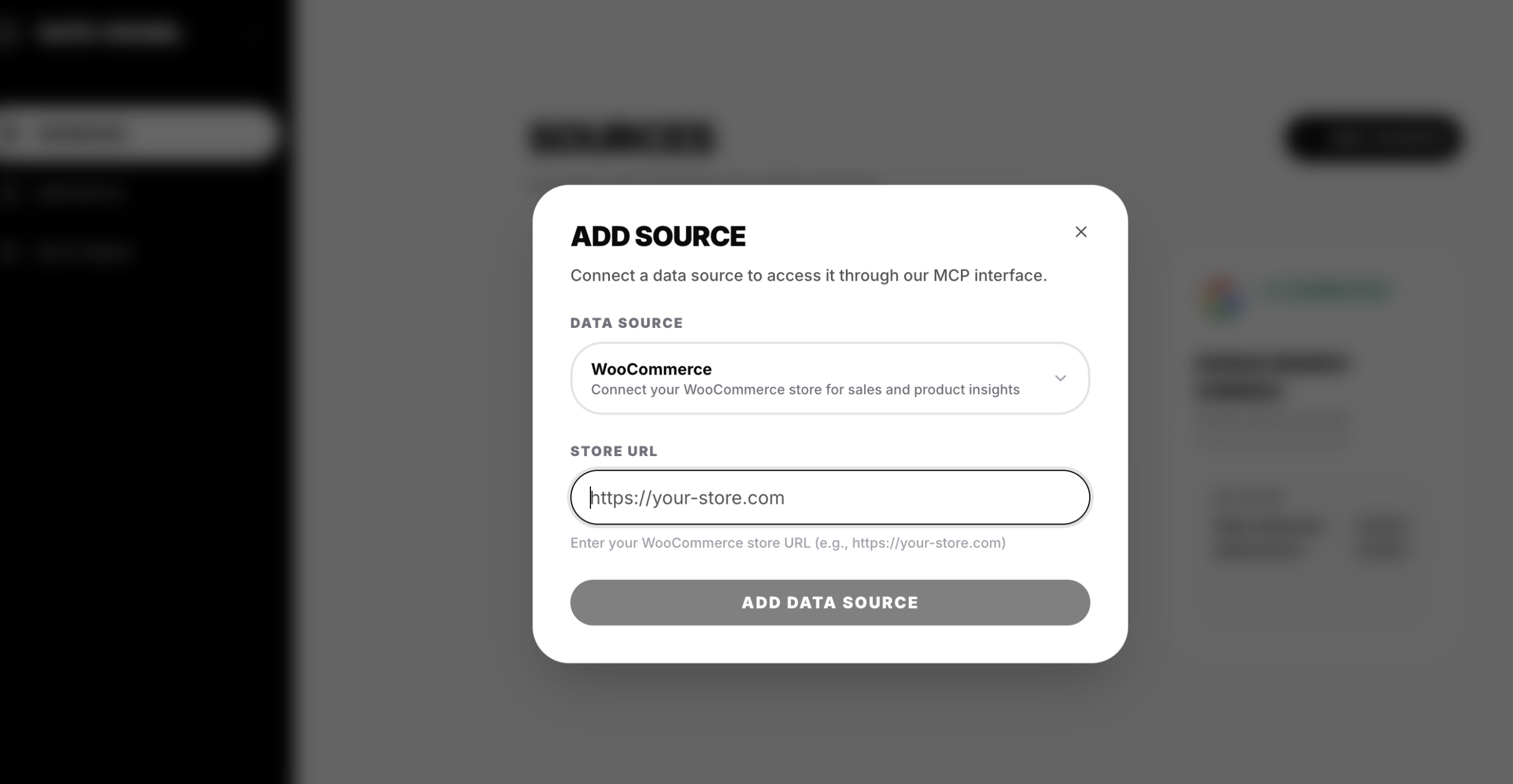
New: WooCommerce Integration Now in Beta
DataVessel now connects to WooCommerce. Ask questions about orders, products, customers, and sales reports in plain English. Beta available at app.datavessel.io.
-
Perplexity’s $34.5 Billion Chrome Bid: Strategic Play or Publicity Stunt?
Perplexity’s $34.5 billion Chrome bid targets Google’s browser monopoly. With DOJ appeals ongoing, the AI search race just got more interesting.
-
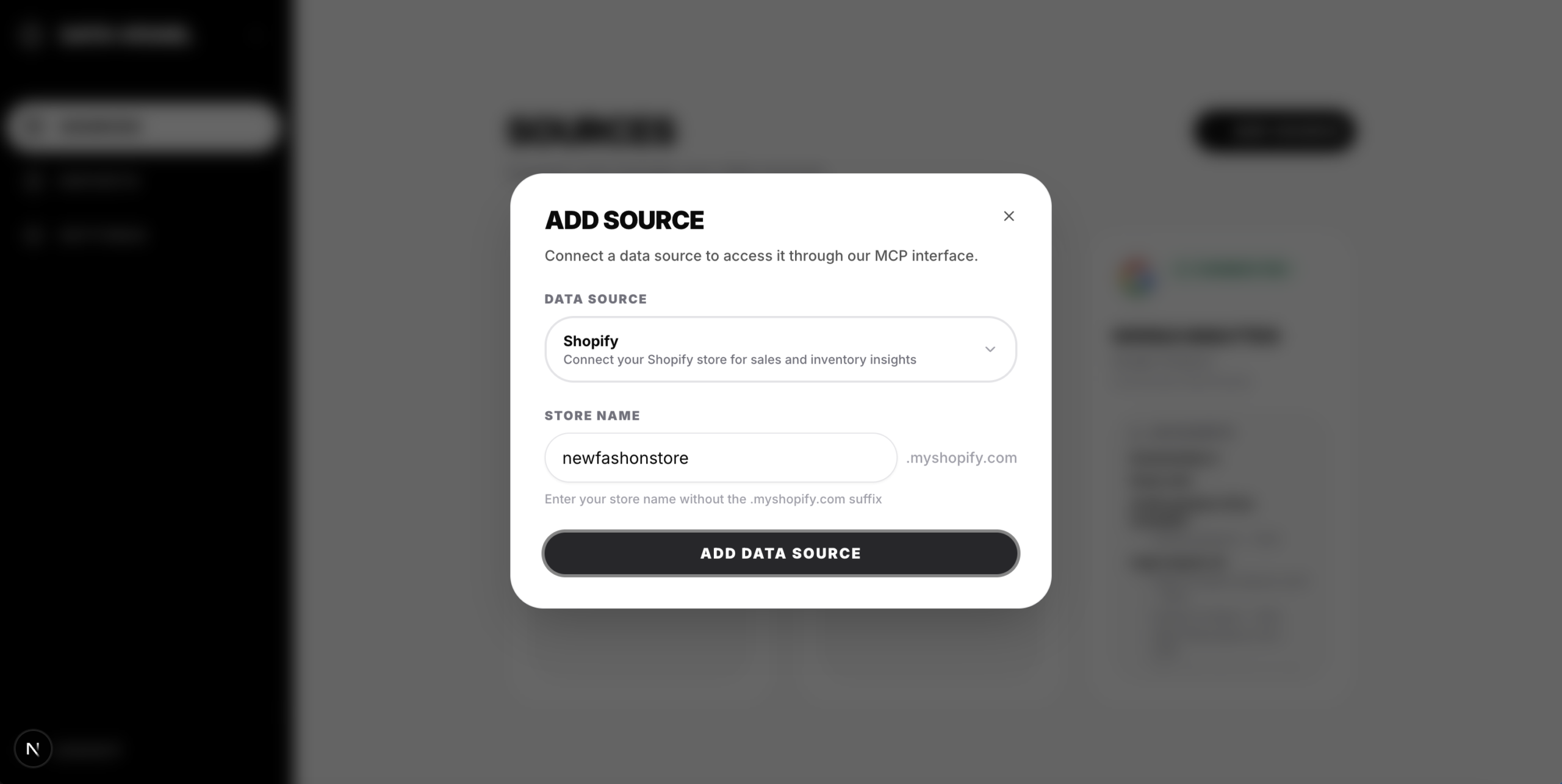
New: Shopify Integration Now Available for Testing
DataVessel now connects to Shopify. Ask questions about orders, inventory, customers, and analytics in plain English. Available now at app.datavessel.io.
-
The Future of Coding Is Agentic: What Apple, OpenAI, and Anthropic Just Proved
Agentic coding is reshaping software development. Apple’s Xcode 26.3, OpenAI Codex, and Claude Code show why AI agents—not copilots—are the future of programming.
-

How to Structure Your Content So AI Actually Cites You
Learn LLM SEO best practices for getting cited in AI-generated answers. Discover why content structure increases AI visibility by 40% and how to optimize for ChatGPT, Perplexity, and Google AI Overviews.
-

Zero-Click Search in 2026: What 60% No-Click Means for Your Business
60% of searches end without a click. When AI summaries appear, fewer than 1 in 10 users click through. Learn what zero-click search means for traffic and visibility.
-
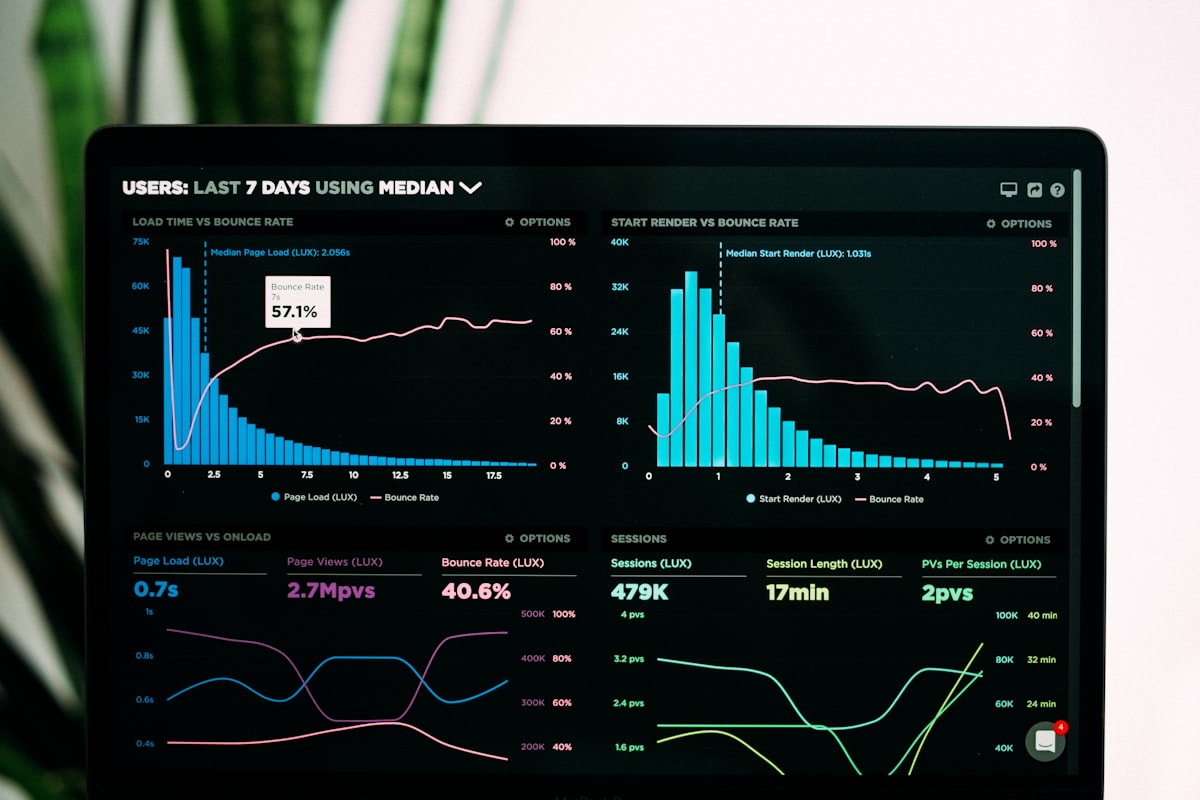
How to Present Startup Analytics to Investors (Without Hiring a Data Analyst)
Learn how to present startup analytics to investors professionally. Create data rooms, generate reports, and answer due diligence questions without a data team.
-
Monday Startup Metrics: 5 Questions Every Founder Should Ask
A practical Monday startup metrics routine for founders. Five essential questions to ask your data weekly, with examples and how to get instant answers.
-

Moltbots and OpenClaw Explained: The AI Agent Revolution
Understand Moltbots, OpenClaw, and the Moltbook social network. Learn what these AI agents do, why they’re trending, and how to try agentic AI yourself.
-
Find 404 Errors in Search Console with AI (Complete Guide)
Learn how to find 404 errors in Search Console using AI, generate PDF reports, and get step-by-step fixing instructions. Save hours of manual audit work.
-
What is MCP? Model Context Protocol Guide for Business
Learn what is MCP (Model Context Protocol) and how it connects AI assistants to your business data. A practical guide for non-technical readers.
-

What is AEO? Answer Engine Optimization Explained for 2026
Learn what is AEO (Answer Engine Optimization) and why it matters for your business in 2026. Practical strategies to get cited by ChatGPT and AI search.
-
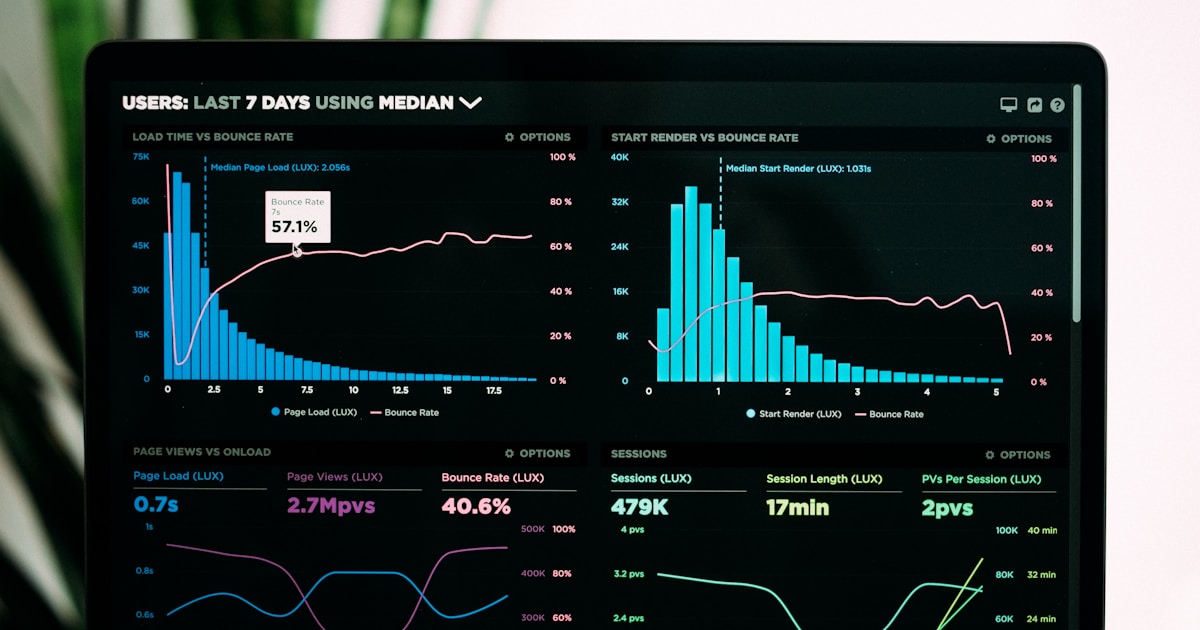
GA4 Alternatives for Founders: AI-Powered Analytics That Work
Discover the best GA4 alternatives for founders who need quick insights without dashboard complexity. Learn how AI analytics saves hours weekly.