The MCP market reached $1.8 billion in 2025, yet most business owners have never heard the term. What is MCP, and why should you care? Model Context Protocol is the technology that lets AI assistants like ChatGPT and Claude actually access your business data—your analytics, your CRM, your sales figures—instead of just generating generic responses based on training data.
Think of MCP as the universal translator between AI and your business systems. Without it, AI assistants answer questions based on what they learned during training. With it, they answer questions based on your actual data, right now. That distinction transforms AI from a clever chatbot into a genuine business intelligence tool.
What is MCP and Why Does It Matter?
Model Context Protocol (MCP) is an open standard introduced by Anthropic in November 2024 to solve a fundamental problem: AI models are isolated from the data that makes them useful for your specific business.
Before MCP, connecting an AI assistant to your Google Analytics required custom development. Connecting it to your Shopify store required different custom development. Each integration meant hiring developers, maintaining code, and dealing with breaking changes whenever APIs updated. The result? Most businesses never connected AI to their actual data.
MCP changes this equation by providing a universal interface. Build one MCP server for Google Analytics, and any MCP-compatible AI client can use it. The same server works with Claude, ChatGPT, or any other assistant that supports the protocol.

The Technical Architecture (Simplified)
MCP uses a client-server model. The AI assistant (like Claude) acts as the client. Your data sources—whether Google Analytics, Postgres databases, or Shopify—expose their data through MCP servers. When you ask a question, the AI queries the relevant server, retrieves the data, and formulates a response.
The protocol handles authentication, data formatting, and context management automatically. You don’t need to understand the technical details to benefit from it, just like you don’t need to understand HTTP to browse the web.
Who Adopted MCP and Why It’s Becoming Standard
Understanding what is MCP requires understanding its adoption trajectory. Within months of Anthropic’s announcement, major players joined the ecosystem:
- OpenAI and Google DeepMind — Both integrated MCP support, making it a true industry standard
- Development tools — Cursor, Replit, GitHub, and Sourcegraph added MCP for code-aware AI assistance
- Automation platforms — Zapier and n8n now support MCP, enabling AI-triggered workflows
- Enterprise vendors — AWS Bedrock and K2view provide enterprise-grade MCP infrastructure
In December 2025, Anthropic donated MCP to the Linux Foundation’s Agentic AI Foundation, co-founded with Block and OpenAI. This move cemented MCP as an open standard rather than a proprietary technology, accelerating adoption across the industry.
Practical Applications for Business Owners
The abstract concept of “connecting AI to data” becomes concrete when you see specific use cases. Here’s what MCP enables for different business functions:
Analytics and Reporting
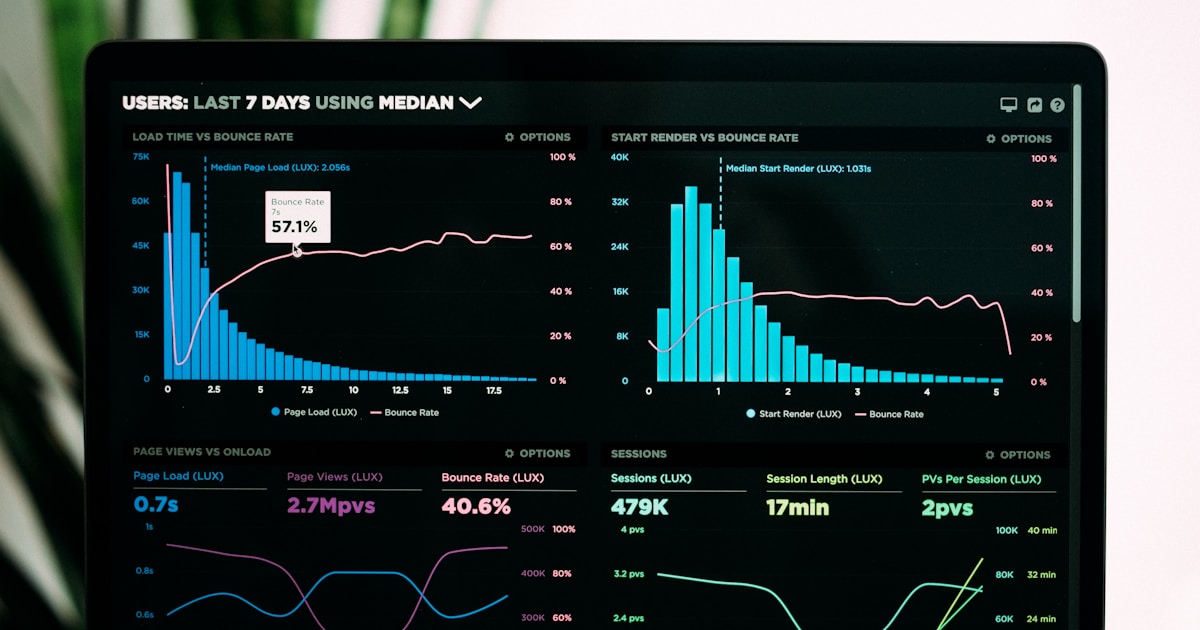
Instead of logging into Google Analytics, navigating reports, and interpreting charts, you ask questions directly:
“What drove the traffic spike last Tuesday?”
“Compare this month’s conversion rate to the same period last year”
The AI queries your analytics through an MCP server and returns a contextual answer. No dashboard navigation required.
E-commerce Operations
For Shopify store owners, MCP-connected AI can answer operational questions that previously required pulling multiple reports:
- Which products have declining sales velocity this quarter?
- What’s the average order value by traffic source?
- Which SKUs should I reorder based on current inventory and sales trends?
Sales and CRM
Sales teams benefit from AI that understands their pipeline context. Rather than generic advice, they receive insights based on actual deal data, customer history, and team performance metrics.

How MCP Differs from Traditional Integrations
You might wonder: “Can’t I already connect tools using APIs and integrations?” Technically, yes. Practically, MCP offers advantages that traditional approaches lack.
Standardization
Traditional integrations require building connectors for each AI platform separately. An integration built for ChatGPT won’t work with Claude. MCP servers work with any compliant client, reducing development effort and vendor lock-in.
Context Management
MCP handles context intelligently. When you ask follow-up questions, the protocol maintains state and understands what “it” or “that” refers to. Traditional integrations often lose context between requests, requiring you to repeat information.
Security Model
The protocol includes authentication and permission layers. You control what data each AI client can access, with granular permissions rather than all-or-nothing API keys. This matters particularly for enterprise deployments where data governance is critical.
Getting Started with MCP (Without Technical Expertise)
For business owners who want MCP benefits without infrastructure complexity, hosted solutions provide the fastest path. These platforms handle server deployment, authentication, and maintenance while you focus on asking questions.
The evaluation criteria for MCP solutions include:
- Data source coverage — Does it connect to your specific tools (GA4, Shopify, Stripe, etc.)?
- Security architecture — Where does data flow? Is it stored or queried in real-time?
- AI client compatibility — Which assistants can access the data?
- Setup complexity — Can you connect data sources without developer involvement?
How DataVessel Implements MCP for Business Data
DataVessel provides MCP servers specifically designed for business intelligence use cases. The platform connects Google Analytics, Search Console, Shopify, and Stripe to AI assistants through a no-code interface.
The architecture prioritizes data privacy: DataVessel servers query your data sources directly without storing the underlying data. Your analytics remain in Google’s infrastructure, your sales data stays in Shopify—the MCP layer simply enables AI to ask questions.
A typical workflow involves connecting your data sources once, then interacting through your preferred AI client:
“Show me which marketing channels have the highest customer lifetime value”
“What’s the correlation between blog traffic and trial signups over the past 90 days?”
Questions that would require combining data from multiple sources manually become single-request queries. The AI handles the data retrieval and synthesis, returning insights rather than raw numbers.
The Future of MCP in Enterprise
Industry analysts mark 2026 as the year MCP transitions from experimentation to enterprise-wide deployment. Several trends drive this shift:
Regulatory alignment. Healthcare, finance, and manufacturing organizations require strict data governance. MCP’s permission model and audit capabilities meet compliance requirements that ad-hoc integrations cannot.
Agent interoperability. As AI agents become more autonomous—booking meetings, updating records, triggering workflows—they need standardized ways to interact with business systems. MCP provides that foundation.
Cost efficiency. Building custom integrations for each AI platform becomes unsustainable as the number of AI tools proliferates. MCP’s build-once-use-everywhere model reduces ongoing development costs.
Key Takeaways
Understanding what is MCP positions your business to leverage AI more effectively. The protocol transforms AI assistants from general-purpose chatbots into context-aware tools that understand your specific data and operations.
The technology has reached maturity: major AI providers support it, enterprise platforms offer it, and the open standard ensures long-term viability. For business owners, the question shifts from “should we adopt MCP?” to “which implementation approach fits our needs?”
Ready to connect AI to your business data? Try DataVessel free—connect your analytics and start asking questions in plain English. No coding required, no data storage, just direct access to insights.
Sources
- Anthropic – Introducing the Model Context Protocol — Original announcement and technical overview of MCP
- Wikipedia – Model Context Protocol — Protocol history and adoption timeline
- CData – 2026: The Year for Enterprise-Ready MCP Adoption — Enterprise adoption trends and market analysis
- Intuz – Top MCP Servers in 2026 — Comparison of leading MCP server implementations